If your shapewear rolls down, your first instinct is probably to blame yourself — your body shape, your size, the way you move.
That instinct is wrong.
Shapewear that rolls down is not a body problem. It is a fit problem, a construction problem, or both. The right shapewear, in the right size, with the right waistband construction, does not roll. Understanding why it rolls is the first step to finding something that doesn't.
The Four Reasons Shapewear Rolls Down
Reason 1: The Wrong Size
This is the most common cause — and the most counterintuitive.
Most women buy shapewear a size smaller than their measurements, assuming tighter means better support. The opposite is true. Shapewear that is too small for your measurements cannot sit at your natural waist. It slides down to the widest point of your hips because that's where the fabric can relieve the tension it's under.
The waistband of shapewear is designed to sit at a specific circumference — your natural waist. If the garment is sized for a smaller measurement, it cannot maintain that position. It rolls.
Shapewear that is sized correctly for your measurements holds at the waist because it was designed to hold at exactly that circumference. If you're not sure what your correct size actually is, our sizing guide walks through how to measure properly.
Find Your Fit will tell you which waistband construction is right for your specific garment and occasion.
Reason 2: The Waistband Construction
Not all waistbands are built the same. A quality shapewear waistband has:
- A reinforced band of stronger elastic or fabric that holds its position
- Enough width to distribute pressure across the waist rather than concentrating it at a single line
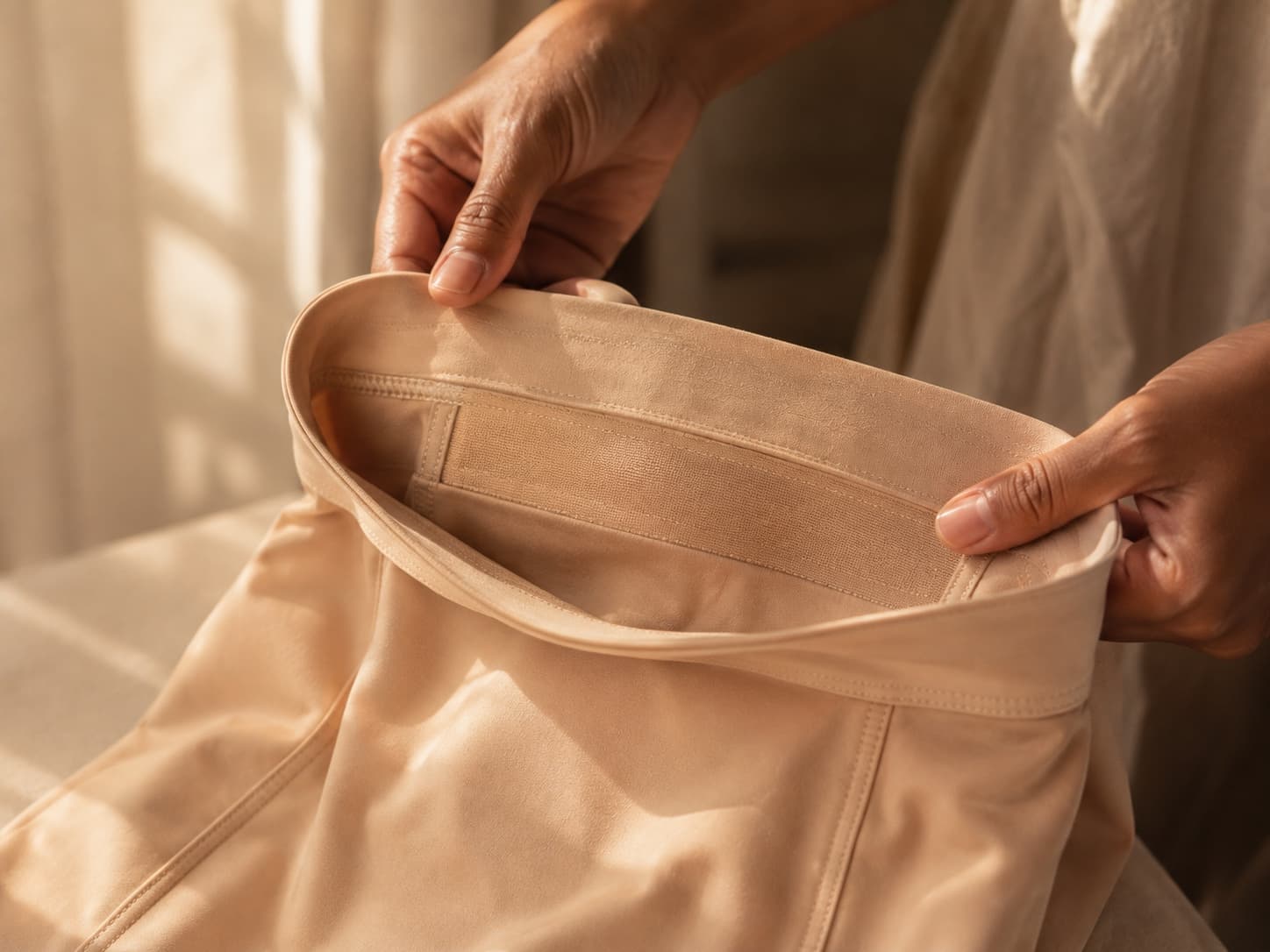
- Grip construction on the interior that prevents the band from sliding
A waistband that is simply the top edge of the compression fabric — with no reinforcement — will roll. The compression fabric is designed to compress, which means it is always trying to contract. Without a reinforced band holding it at the waist, it contracts downward.
Reason 3: The Wrong Style for Your Body
High-waist, mid-waist, and low-waist shapewear are designed to sit at different points on the body. Mid-waist shapewear worn by someone with a longer torso will consistently roll because it cannot reach the natural waist — it sits below it and the compression pulls it further down.
High-waist shapewear — which sits at or above the natural waist — is the most stable style for most body types because it anchors at the narrowest point of the torso, where there is the least fabric tension.
Reason 4: The Fabric Has Lost Its Elasticity
Shapewear fabric wears out. After repeated washing and wearing, the elastic fibers break down and the compression reduces. A waistband that held perfectly when new will roll after the fabric loses its structure.
Most shapewear has a functional life of 30–40 wears with correct care. Beyond that, the rolling is not a fit problem — it's a garment age problem.
The Specific Problem Under Indian Garments
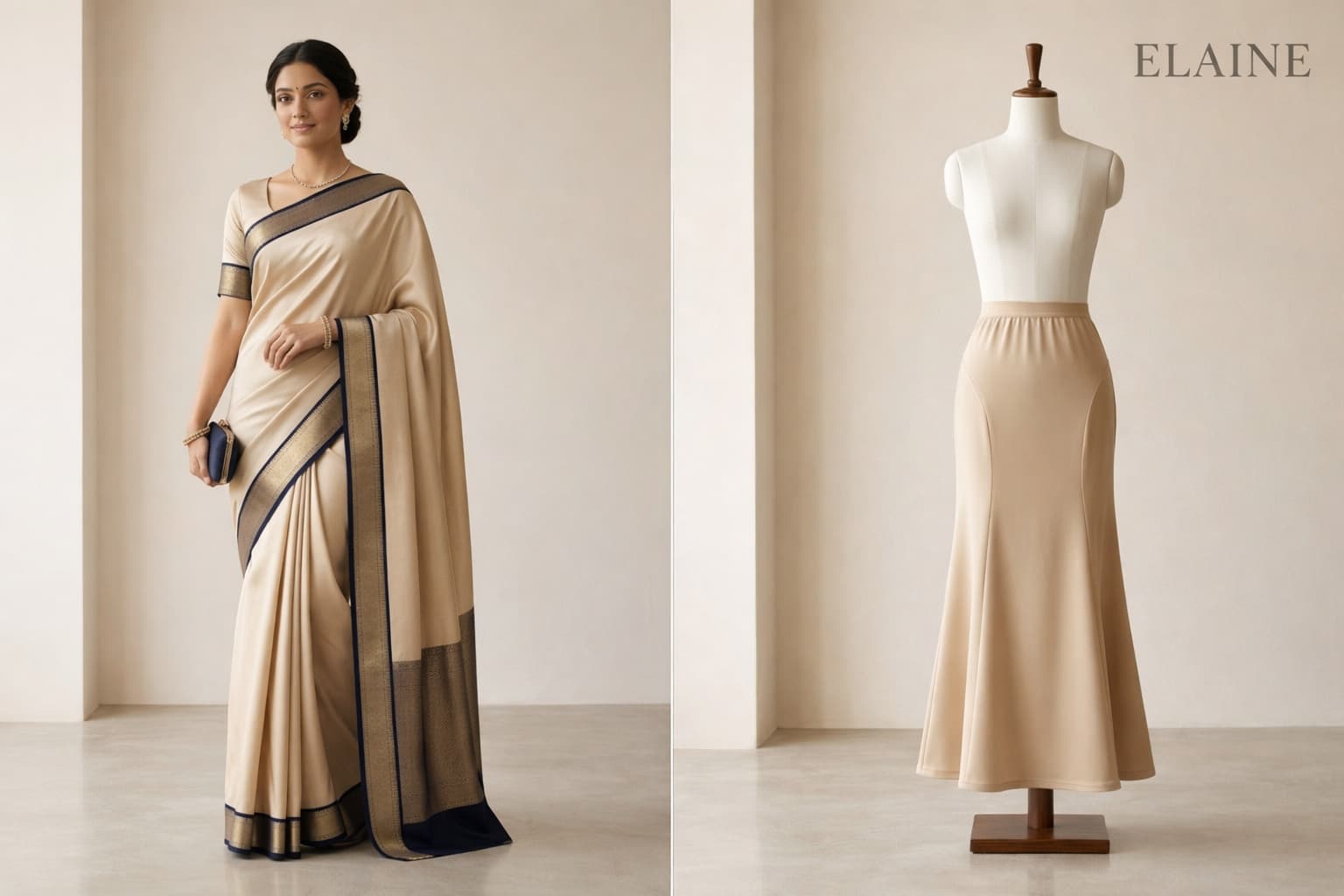
Rolling shapewear is inconvenient under Western clothes. Under a saree or lehenga, it is a more significant problem.
A saree is pinned and tucked at the natural waist. If the shapewear has rolled below the natural waist by the time you've finished draping, the entire drape sits unevenly. The pleats don't lie flat. The pallu doesn't sit correctly. And you cannot easily fix it without unwrapping and re-draping.
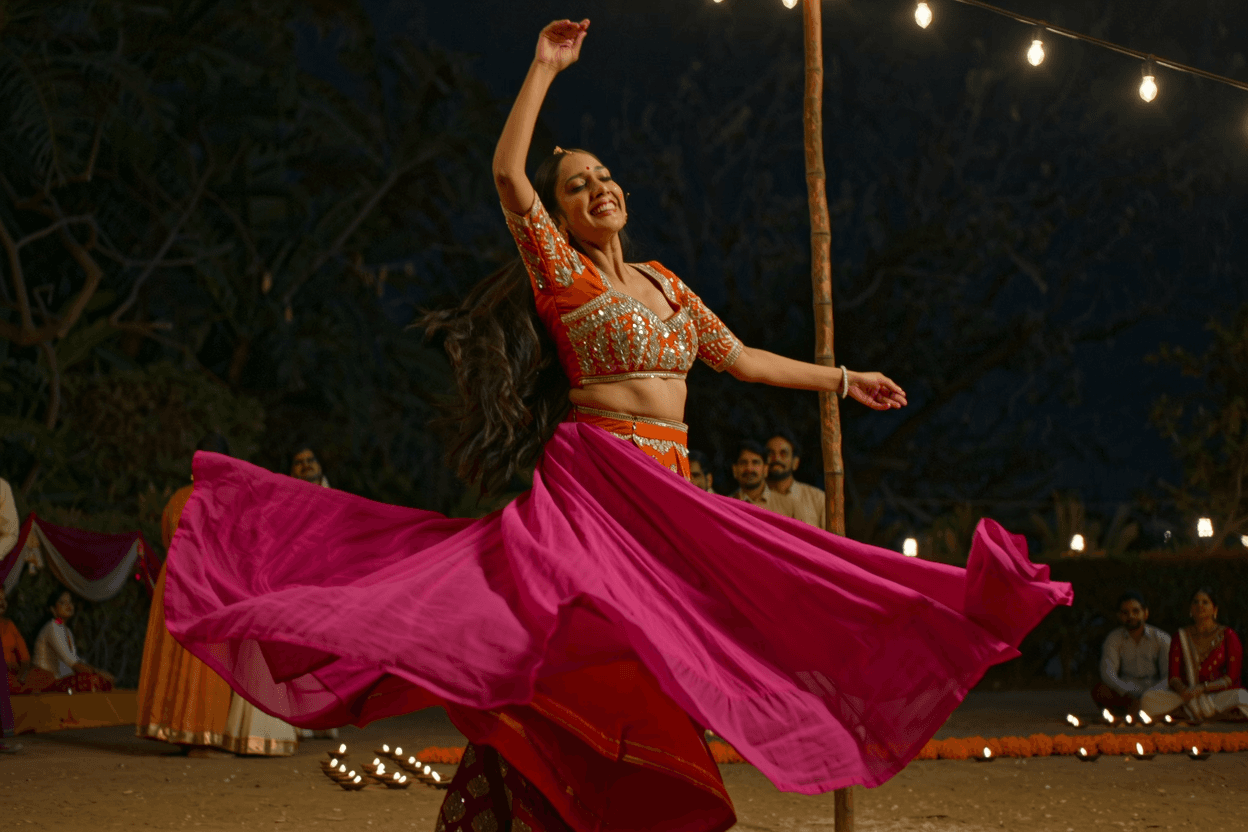
A lehenga skirt sits at the natural waist. If the shapewear rolls below it, the skirt waistband has nothing to anchor against and shifts through the event.
For fitted or body-hugging sarees, where the fabric sits directly against the base layer with no pleats for cover, the requirements go a step further.
This is why waistband construction is not a minor detail for Indian occasion wear — it's the most important feature of any shapewear worn under a saree or lehenga.
What the Waistband Actually Needs to Hold Under a Saree
Generic shapewear is tested against everyday Western wear — a dress, a pair of trousers, a few hours of movement. That is not the load condition of an Indian occasion.
A standard silk saree weighs between 600 and 900 grams. A Kanchipuram or Banarasi saree in heavy zari can reach 1.2 kilograms. That weight does not distribute evenly across the body — the majority of it passes through the drape point at the natural waist, directly onto the waistband of whatever sits underneath. Eight to twelve hours of that load, through a wedding reception, a sadya, a festival, or a sangeet, is a different engineering problem than two hours under a shift dress.
For a waistband to hold under these conditions, three things matter:
Waistband width. A narrow waistband — anything under 6 centimetres — concentrates the saree's weight into a single pressure line. Under sustained load, that line rolls. A waistband of 7 to 10 centimetres distributes the same weight across a wider surface area, reducing the force at any single point and making it structurally harder for the band to fold.
Grip construction on the interior. Compression alone does not prevent rolling — it only creates the conditions under which rolling becomes possible. A silicone grip strip on the inside of the waistband creates friction against the skin that holds the band at a fixed position regardless of what the saree is doing above it. For Indian occasion wear, this is not a premium feature — it is the minimum requirement. The grip strip needs to run around the full inner circumference, not just the front panel, because the saree load comes from all directions.
Fabric recovery under sustained compression. Shapewear fabric stretches and contracts with every movement — sitting, standing, bending into a salaam, navigating a crowded mandap. Low-elastane fabrics lose their recovery over the course of a long event, which means a waistband that held at 9am may no longer hold by 3pm. Fabrics with higher elastane content in a firm-weave construction maintain their tension across a full twelve-hour occasion. The weave structure matters as much as the elastane percentage — a loose weave at 25% elastane will lose tension faster than a dense seamless weave at 18%.
This is why shapewear designed for Western everyday wear consistently fails under Indian occasion garments — not because the product is poor by its own standards, but because it was never tested against the specific load, duration, and garment interaction of a saree or lehenga worn for a full day.
How to Check Before You Buy
Before purchasing shapewear, look for:
A dedicated waistband section. The top 3–5cm of the shapewear should be visibly different from the compression body — reinforced, with interior grip, and made to hold at a specific circumference.
Your correct measurements. Measure your natural waist (the narrowest point of your torso, usually 2–3 fingers above the navel) and your hips (the widest point). Size to your measurements, not to a size smaller.
High waist construction if you'll wear it under a saree or lehenga. High-waist shapewear sits at the natural waist and is the most stable option for Indian garments where the base must anchor at exactly that point.
Shapewear with a silicone grip strip along the inside of the waistband applies friction against the skin rather than relying on compression alone to stay in place — it is the single most effective construction feature for preventing rolling during movement and sustained wear.
What to Do If Your Current Shapewear Rolls
Check the size first. Measure your natural waist and compare to the size chart of your current shapewear. If you sized down, try your correct measurement size before assuming the product doesn't work.
Check the waistband. Fold the waistband over — is there a reinforced inner band, or is it simply the edge of the compression fabric? A reinforced band holds. A plain edge rolls.
Check the age. If you've worn the shapewear more than 30–40 times, the elastic may simply be finished. Rolling after extended use is not a size problem — it's a replacement problem.
Try high-waist if you've been wearing mid-waist. For most bodies and most Indian garments, high-waist is the more stable option.
Frequently Asked Questions
Why does my shapewear always roll down?
The most common cause is sizing down — shapewear that is too small for your measurements cannot hold at the natural waist and rolls to the widest point of the hips. The second most common cause is a waistband without reinforcement that cannot hold its position under compression.
How do I stop my shapewear from rolling?
Size to your actual measurements rather than a size smaller. Choose high-waist shapewear with a reinforced waistband. Check that the waistband has interior grip construction to prevent sliding.
Why does shapewear roll down when I sit?
Sitting increases the tension on the waistband as the torso compresses slightly. A waistband that was holding while standing may roll when seated if it doesn't have sufficient reinforcement. This is a waistband construction issue, not a body issue.
Does shapewear roll down because of body shape?
No. Shapewear that rolls is either the wrong size, has inadequate waistband construction, or has aged beyond its functional life. Correct sizing and waistband construction hold on every body shape.
How many times can you wear shapewear before it stops working?
Approximately 30–40 wears with correct care (hand wash or delicate machine wash, air dry, no tumble dryer). The elasticity in the fabric breaks down with heat and mechanical stress. Rolling after heavy use is a sign the garment needs replacing.
What is the best shapewear that doesn't roll down?
High-waist shapewear with a reinforced internal waistband and interior grip construction, sized to your exact natural waist and hip measurements. See our sizing guide for how to measure correctly.
Read next: How to Choose Your Saree Shapewear Size · Which Shapewear is Best for a Saree? · Can You Wear Shapewear Under a Saree? · How to Stop Shapewear Rolling Under a Saree · What to Look For in Saree Shapewear — The Buying Guide · How to Choose Shapewear for Your Saree — The Complete Guide · Field Note 01 — What We Are Beginning to Learn · We Heard the Same Four Complaints About Saree Shapewear