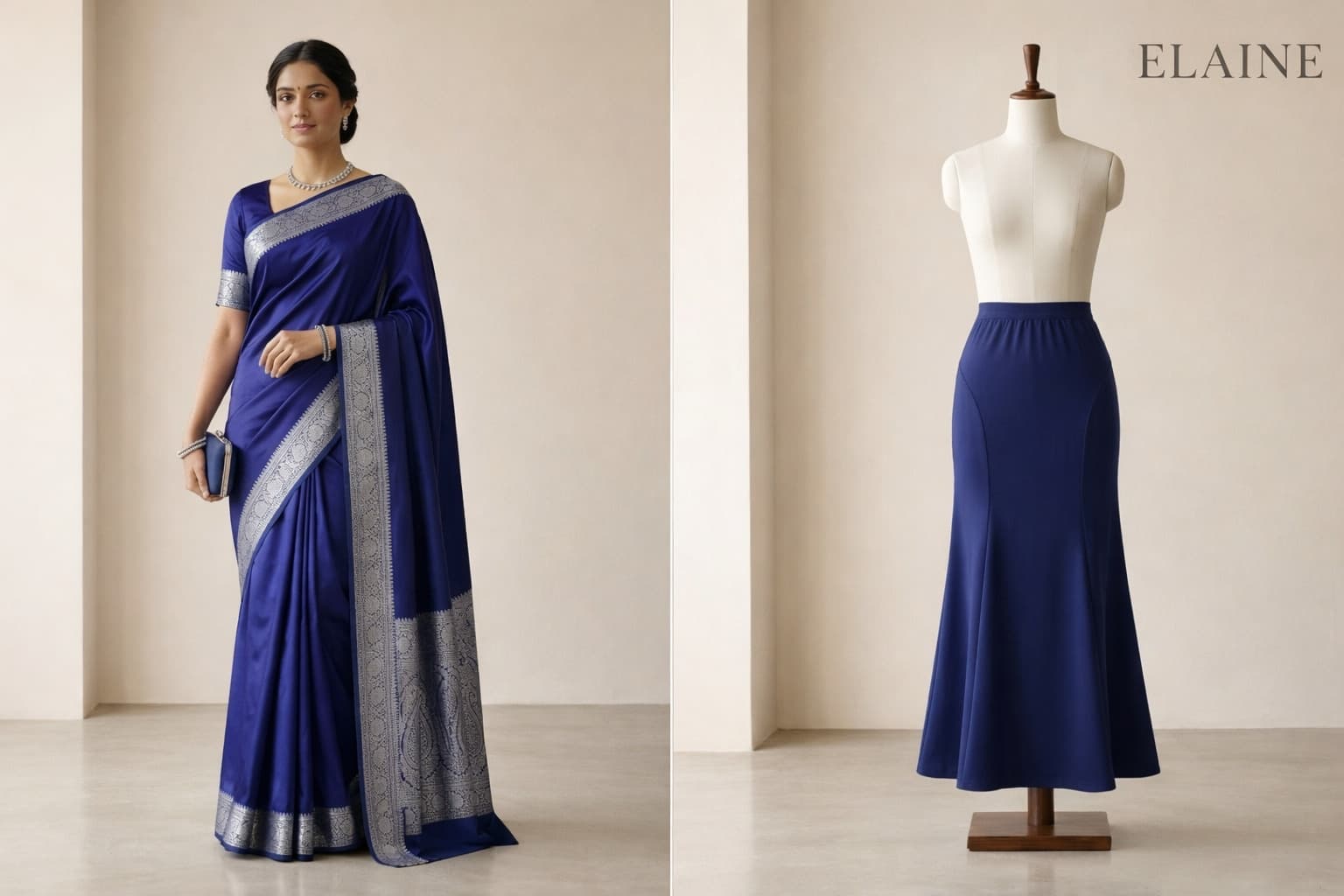
Yes. And for many women, it's the reason a saree stays in place all day.
But the question isn't whether you can wear shapewear under a saree. The question is which shapewear actually works — and why most shapewear designed for Western garments fails completely when worn under a saree.
Why Most Shapewear Doesn't Work Under a Saree
Standard shapewear is designed for fitted Western garments — bodycon dresses, pencil skirts, tailored trousers. It's built to smooth a silhouette, not to support a draped fabric.
A saree works differently. It wraps, pleats, and pins. The way it sits depends entirely on what's underneath. A base layer that bunches, rolls, or sits in the wrong place will ruin the drape — no matter how carefully you've pinned the saree.
The specific problems with Western shapewear under a saree:
The waistband sits too low. Most shapewear waistbands are designed to sit at or below the natural waist. Saree pleats tuck into the petticoat at the natural waist. If the shapewear waistband is lower, you get visible bunching right where the pleats sit.
The fabric adds bulk. Thick synthetic fabrics add visible bulk under silk sarees and lightweight drapes. You can see the edge of the shapewear through the saree.
It doesn't stay. Shapewear designed for fitted garments relies on the garment itself to hold it in place. Under a saree, there's nothing pushing the shapewear flat. It shifts, rolls, and bunches.
It's not breathable. Indian weddings are long. Indian summers are hot. A shapewear fabric designed for a 3-hour European event doesn't survive 8 hours in a Tamil Nadu wedding hall.
What Actually Works Under a Saree
High-waist is non-negotiable.
The shapewear must sit at or above the natural waist — the same height as the petticoat. This ensures the pleats tuck cleanly over the shapewear without creating bulk or visible transitions.
Low-rise or mid-waist shapewear doesn't work under a saree. The waistband sits in the wrong place and interferes with the drape.
The fabric must match the saree.
- For heavy silk sarees: structured silk-blend compression that anchors the fabric and holds the pleats.
- For lightweight Georgette or chiffon: seamless fabric with no raised seams that would show through.
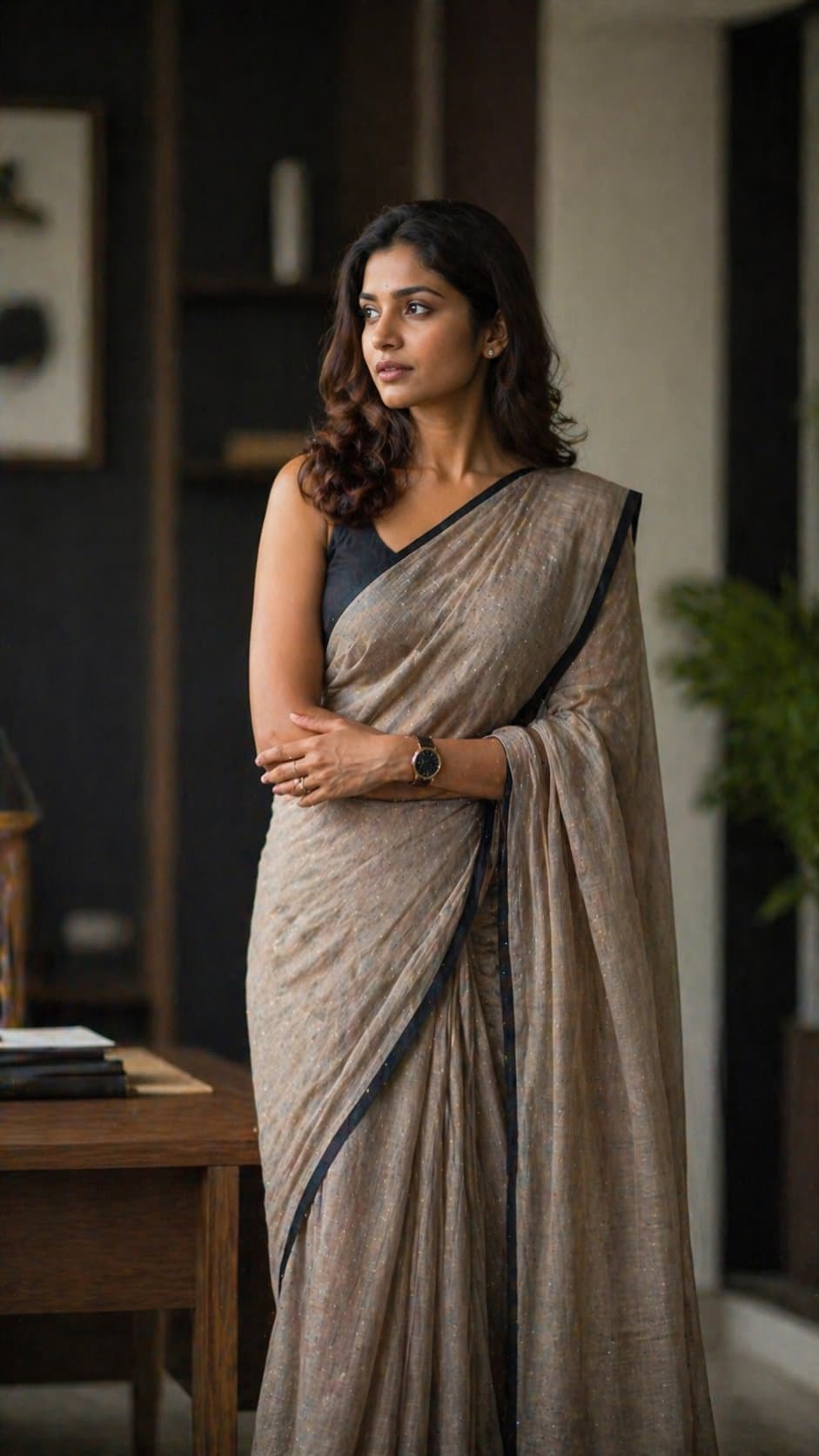
- For everyday cotton sarees: breathable cotton blend that stays comfortable through all-day wear.
For fitted or body-hugging sarees specifically, the requirements change again — see our guide on what actually works for body-hugging sarees.
The waistband must hold without digging.
The shapewear will be worn for hours with a saree tucked over it. A waistband that digs in becomes unbearable within two hours. A quality waistband holds firmly without creating pressure points.
It must breathe.
This is the most overlooked requirement. Indian occasion wear is often worn in warm environments for extended periods. Shapewear that doesn't breathe creates heat, discomfort, and the desperate need to take it off — usually in the middle of someone's wedding.
Common Questions About Wearing Shapewear Under a Saree
Can we sit wearing saree shapewear?
Yes — if it's the right style. High-waist shapewear with a flexible waistband allows normal sitting and movement. Shapewear that's too tight or too stiff becomes painful when seated for extended periods.
Can we dance in saree shapewear?
Yes — with the right fabric. Cotton-blend and seamless fabrics move with the body. Overly structured compression styles restrict movement and aren't suitable for active occasions like Navratri or wedding dances.
Can shapewear hold a heavy saree?
A high-compression silk-blend base layer creates a stable foundation for heavy silk sarees like Kanchipuram or Banarasi. It anchors the pleats and prevents the saree from shifting during wear.
Can we wear shapewear under a net saree?
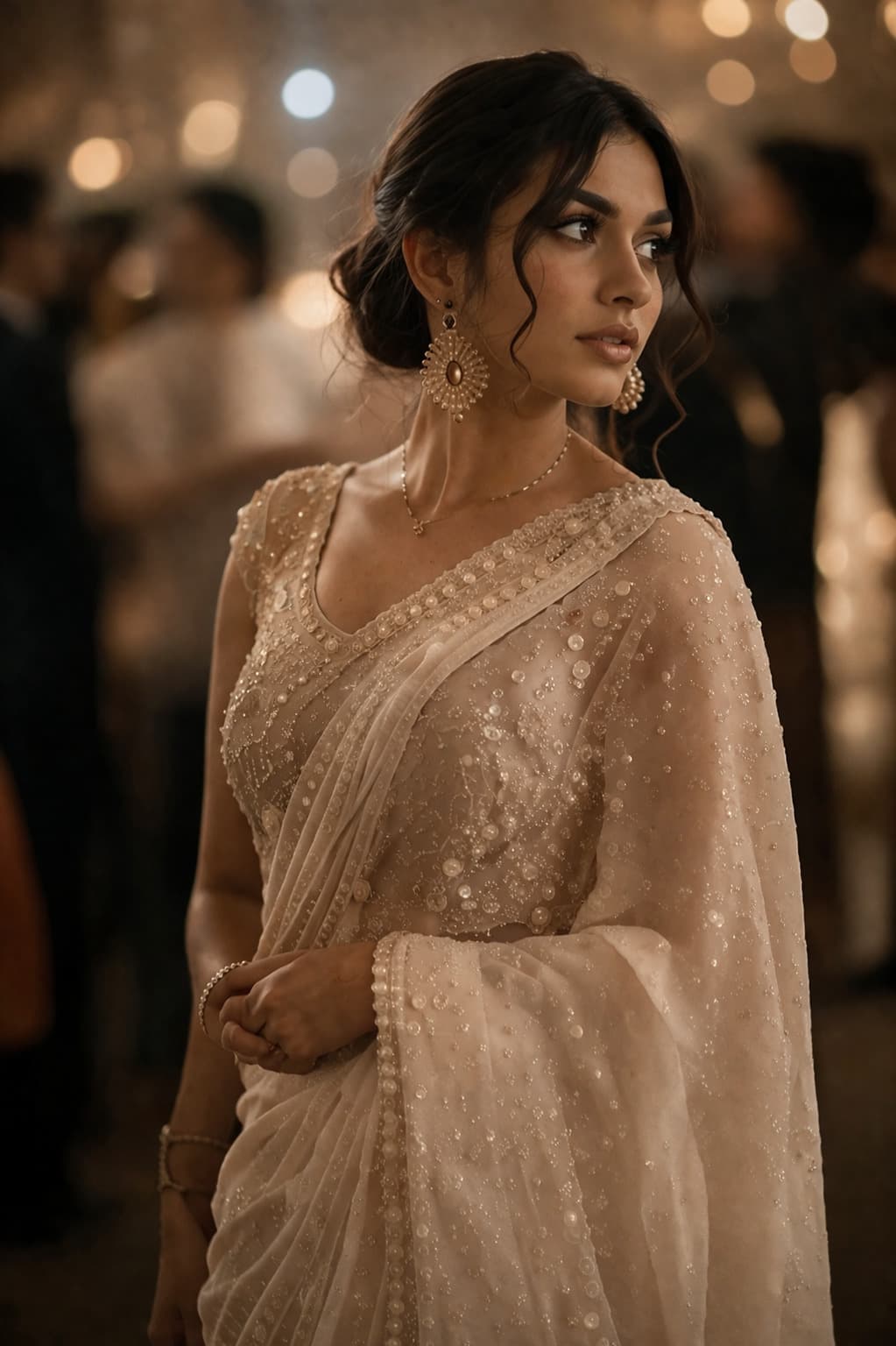
With care. Net sarees are transparent and require completely seamless, skin-tone shapewear. Any visible seam, texture, or pattern will show through the fabric. Only seamless shapewear with no raised edges works under net.
What about during pregnancy?
Shapewear during pregnancy is a medical question and varies by trimester and individual circumstance. We'd recommend speaking with your doctor before wearing any compression garment during pregnancy.
The Bigger Question
The question isn't really "can you wear shapewear under a saree." It's: why has it taken this long for shapewear to be designed for the saree specifically?
Every aspect of how a saree is worn — the waist height, the fabric weight, the drape, the duration, the climate — requires a different approach than Western garment shapewear. The answer to that question is Elaine.
Frequently Asked Questions
Can you wear shapewear underneath a saree?
Yes — but it must be high-waist shapewear that sits at the natural waist, the same height as the petticoat. Standard Western shapewear sits too low and creates bunching where the saree pleats sit. The right shapewear disappears completely beneath the drape.
What shapewear goes underneath a saree?
High-waist compression shapewear with a firm, non-rolling waistband. The fabric should match the saree — silk blend for heavy ceremonial silks like Kanchipuram and Banarasi, seamless fabric for lightweight Georgette or chiffon sarees.
Does shapewear show underneath a saree?
Not if you choose the right style. Seamless shapewear with no raised edges is invisible under lightweight fabrics. For very sheer fabrics like tissue or net sarees, only ultra-thin seamless shapewear in a matching skin tone works without showing.
Can you wear shapewear underneath a Kanchipuram saree?
Yes — high-compression silk blend shapewear is specifically designed for heavy ceremonial silks like Kanchipuram. It anchors the pleats, supports the weight of the fabric, and holds the drape through extended wear without rolling or shifting.
How do you wear shapewear underneath a saree without it showing?
Choose high-waist shapewear in a skin tone that matches your complexion. The waistband should sit at exactly the same height as your petticoat. Avoid shapewear with visible seam edges — seamless construction is essential under lightweight or sheer saree fabrics.
Which shapewear is best for wearing under a saree for a full day?
For a full wedding day of 8–12 hours, silk blend high-waist shapewear with a reinforced waistband performs best. It breathes better than synthetic fabrics, holds structure through extended wear, and stays in place through sitting, standing, and movement without the waistband digging in over time.
Read next: Which Shapewear is Best for a Saree? · 3 Shapewear Mistakes Women Make · Collection — Launching Soon