Shapewear has a reputation problem. It's been sold as uncomfortable, restrictive, only for certain body types, or only for special occasions. Most of that isn't true — but the myths persist because the category has been defined by products that weren't designed for how Indian women actually dress.
Here's what you've been told about shapewear, what's actually true, and what changes when the product is built for the saree, the lehenga, and the silk you already own.
Myth 1: Shapewear is uncomfortable.
What's true: Poorly fitted shapewear is uncomfortable. Shapewear made from the wrong fabric for the occasion is uncomfortable. Shapewear designed for Western silhouettes and applied to Indian dressing without adaptation is uncomfortable.
What's not true: That all shapewear, by definition, must be restrictive or painful to wear.
Discomfort in shapewear comes from one of three things: wrong size, wrong fabric, or wrong construction. A well-fitted piece in the right fabric for the right occasion should disappear. You should forget you're wearing it — not spend the day adjusting it.
What this means for you: If shapewear has been uncomfortable in the past, the problem wasn't you. It was the product. Size correctly, choose the fabric that matches the occasion, and expect comfort. Anything less is a design failure, not a category truth.
Myth 2: Shapewear is only for certain body types.
What's true: Every body benefits from structural support when wearing garments that require a smooth base — whether that's a silk saree, a fitted lehenga, or an evening gown.
What's not true: That shapewear exists to "fix" certain bodies or that only some women "need" it.
Shapewear is not corrective. It is foundational. The same way a well-constructed blouse supports the drape of a saree, shapewear supports the silhouette of the outfit. It holds things in place so the garment can do what it was designed to do — drape, flow, sit without pulling.
This has nothing to do with body type. It has everything to do with the physics of fabric and the structure required to make certain garments work the way they're meant to.
What this means for you: Shapewear is for anyone wearing an outfit that benefits from a smooth, structured base. That's the only criterion.
Myth 3: You can see shapewear through clothes.
What's true: You can see badly chosen shapewear through clothes. Visible panty lines, fabric bunching at the waist, seams showing through sheer fabric — these are all real problems.
What's not true: That shapewear is inherently visible or that you have to choose between support and invisibility.
The visibility problem comes from mismatched fabric. Wearing compression shapewear with heavy seams under a lightweight georgette saree will show. Wearing shapewear with lace trim under a fitted silk blouse will show. Wearing the wrong rise — too high, too low — under a specific garment will create lines.
The solution is not to avoid shapewear. The solution is to choose seamless construction, the right fabric weight for the outfit, and the right rise for the silhouette.
What this means for you: If your shapewear is visible, you're wearing the wrong style for that outfit. Match the fabric — seamless for sheer or lightweight garments, structured for heavier silks. The right combination is completely invisible.
Myth 4: Shapewear rolls down.
What's true: Shapewear can roll down — if the waistband is poorly designed, if the sizing is wrong, or if the fabric doesn't have enough grip to stay in place during movement.
What's not true: That rolling is an unavoidable feature of the category.
Rolling happens when the waistband is too tight — creating pressure that pushes the garment down — or too loose, with no grip to hold it in place. It also happens when the fabric is too slippery or when the rise is wrong for your torso length.
A well-constructed waistband with silicone grip, correct sizing, and fabric that moves with you should stay in place all day — whether you're sitting, standing, or dancing at a wedding.
What this means for you: If shapewear rolls down, the fit or construction is wrong. It is not a problem you have to tolerate. Expect it to stay in place.
Myth 5: Shapewear is only for special occasions.
What's true: High-structure, full-coverage shapewear designed for heavy silks and long event days is occasion-specific. You wouldn't wear that to the office or on a regular Tuesday.
What's not true: That shapewear as a category is only useful for weddings, festivals, or formal events.
Shapewear exists across a spectrum — from lightweight, everyday comfort pieces designed for breathability and ease, to structured, all-day support for occasions that require you to look and feel flawless for eight hours straight.
The everyday versions are not restrictive. They are not uncomfortable. They are simply a smooth, supportive base that makes your regular wardrobe — office sarees, cotton kurtis, casual salwars — sit better and feel better.
What this means for you: Shapewear is not a special-occasion-only garment. It is a wardrobe tool that can be used daily, casually, and comfortably — if you choose the right piece for the right context.
The Real Truth About Shapewear
Shapewear should support — not suffocate. It should disappear — not distract. It should make the outfit work better, not make you second-guess whether you can sit down comfortably.
The myths exist because most shapewear has been designed for Western body types, Western garments, and Western dressing contexts — and then sold in India without adaptation. When the product doesn't account for the saree, the heat, the nine-yard drape, or the all-day wedding, it fails. And the category gets the blame.
The right shapewear, designed for Indian women and Indian occasions, changes all of this.
It holds without restricting. It stays without rolling. It supports without showing. And it does all of this while letting you forget you're wearing it in the first place.
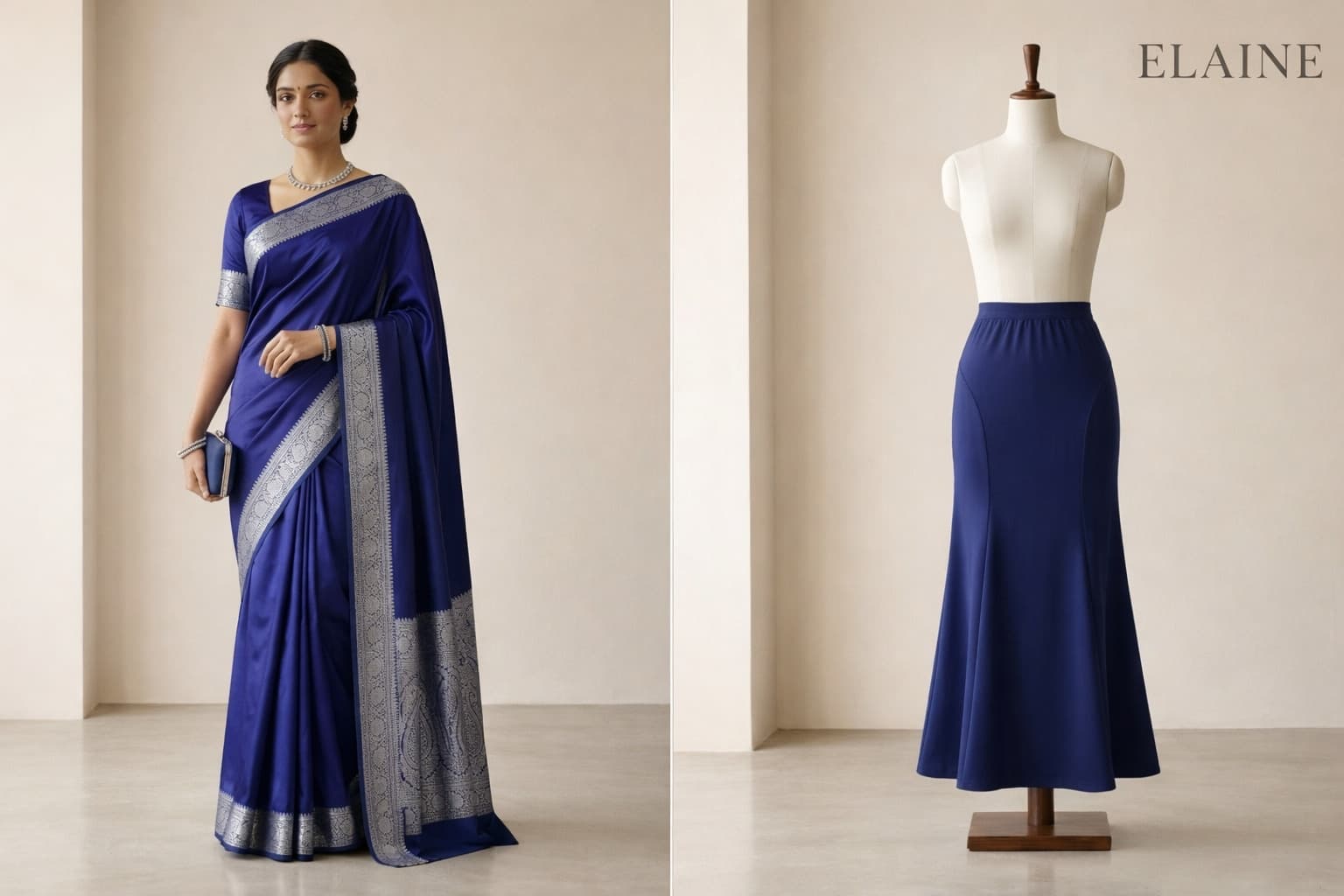
Elaine is shapewear designed for Indian women — for the saree, the lehenga, the silk, and every occasion in between. Learn more about our fabrics in the Fabric Spotlight or explore the Collection.