Most shapewear is designed and tested for stillness — standing, sitting, walking. It is rarely designed for what an Indian wedding, a sangeet, or nine nights of garba actually demand: sustained, energetic movement, for hours, in a single outfit.
This is a different requirement than everyday shapewear solves, and it deserves a direct answer.
Why Dancing Breaks Shapewear That Otherwise Works Fine
Shapewear that feels perfectly secure while standing or sitting can fail completely on a dance floor. Three things happen during sustained movement that don't happen during stillness:
Repeated muscle contraction. Dancing engages the core, hips, and legs continuously. Shapewear that holds during static compression can shift when the muscles underneath are repeatedly flexing and releasing.
Heat and perspiration. Active movement raises body temperature quickly. Fabric that isn't breathable becomes damp, and damp fabric loses grip — a waistband that holds on dry skin can slip on perspiring skin within twenty minutes.
Range of motion. Garba and dandiya in particular involve bending, twisting, and rapid directional changes. Shapewear designed for a narrow range of motion — sitting and standing — restricts this, which either causes discomfort or causes the wearer to compensate by tugging at the garment, which then causes rolling or shifting.
The result is shapewear that worked perfectly at the start of the evening and has rolled, shifted, or become unbearable by the second song.
What Actually Stays in Place While Dancing
A reinforced, wide waistband — not a thin elastic edge.
The single most important factor for staying in place during movement is waistband construction. A wide band (ideally 3–5cm) with reinforced elastic and interior grip distributes pressure evenly and resists rolling far better than a narrow, single-layer edge. This matters more for dancing than for any other activity, because the waistband is under continuous, repeated stress rather than steady, constant stress.
Breathable, moisture-wicking fabric.
Cotton-blend or moisture-wicking synthetic fabric maintains its grip even as you perspire. Fabric that traps heat without managing moisture becomes slippery exactly when you need it to hold the most.
Medium compression — not maximum.
This may be counterintuitive, but maximum compression is not the most secure option for dancing. Very firm compression restricts the natural movement of muscles underneath, which means the body works against the garment rather than with it — increasing the likelihood that something shifts as you compensate. Medium compression that moves with the body, combined with a strong waistband that holds position, outperforms maximum compression for active wear.
A cut that matches your range of motion.
For garba and dandiya specifically, look for shapewear that allows full hip rotation and knee lift without restriction. Shorts-style shapewear that ends well above the knee, rather than a longer style, allows for the bending and stepping movements specific to garba choreography.
By Type of Dancing
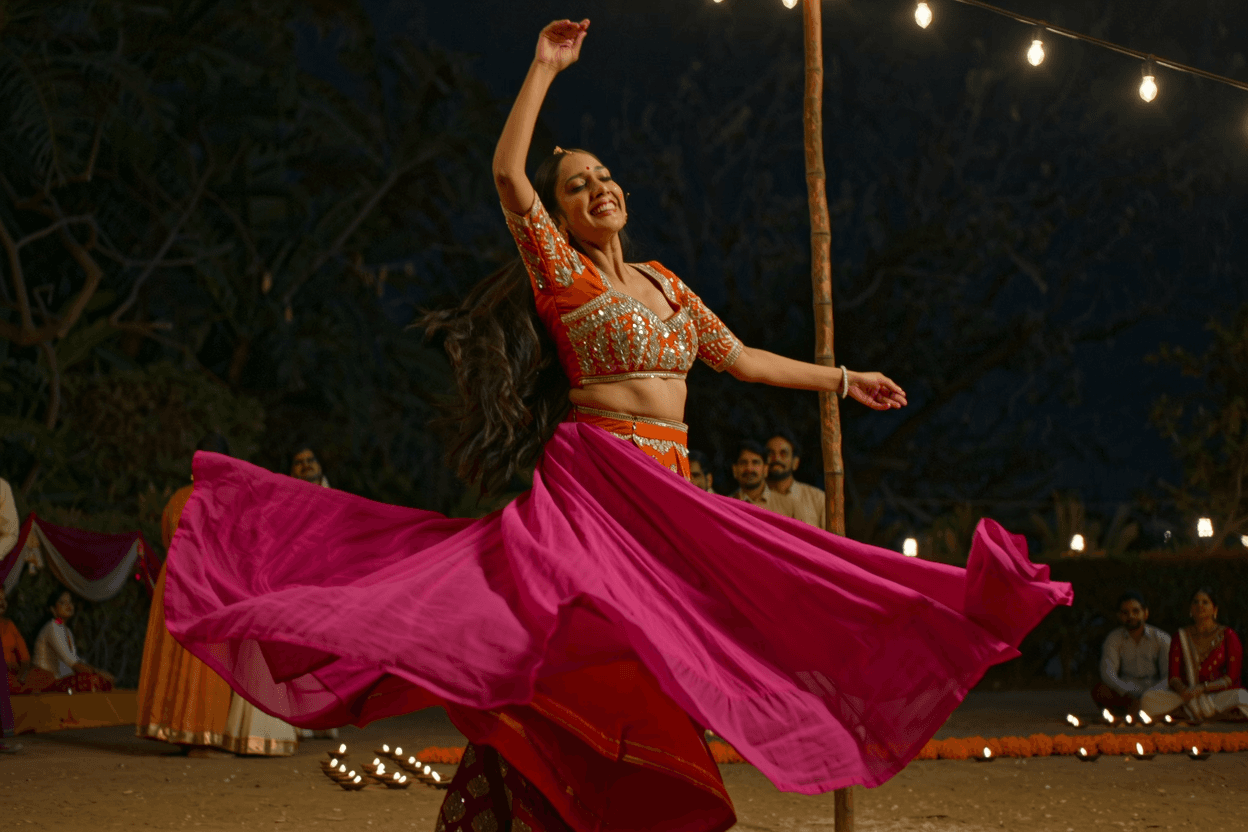
Garba and dandiya (Navratri, sustained dancing over hours)
Prioritize breathability above all else — this is the longest sustained movement category and heat management determines comfort more than anything else. High-waist seamless shorts in a moisture-wicking fabric, medium compression, worn under a chaniya choli that ties at the same waist height.
Sangeet performances (shorter, often choreographed, sometimes in a lehenga)
A lehenga sangeet performance often involves more controlled, choreographed movement rather than continuous free dancing. High-waist seamless shapewear with a reinforced waistband is sufficient — the priority here shifts slightly toward smoothness under a fitted lehenga waist alongside movement security.
Wedding reception dancing (less structured, shorter bursts, often in a saree or gown)
The shortest duration of the three categories, but often the least predictable in terms of movement — sudden requests to dance, unplanned bursts of activity. A waistband that holds securely without requiring any "warm up" period matters most here, since there's no time to adjust before being pulled onto the dance floor.
What Doesn't Work for Dancing
Anything marketed purely for "shaping" or "slimming." These styles are typically designed and tested for static wear, not movement, and often use thinner compression that wasn't built to withstand repeated stress.
Bodysuits with restrictive leg openings. These can dig in at the upper thigh during hip rotation and knee lift, which becomes acutely uncomfortable during garba-style movement.
Anything that required significant downsizing to feel secure. If you sized down to compensate for an unreliable waistband, that compromise will be more exposed during movement than during stillness — the smaller size restricts range of motion without solving the actual rolling problem.
A Practical Test Before the Event
If you're unsure whether your shapewear will hold up for a night of dancing, test it before the event, not during it. Wear it for twenty minutes of the same kind of movement you expect to do — dancing around your room, stepping side to side, bending as you would for garba. If it has shifted, rolled, or become uncomfortable within that window, it will not hold for a full evening.
Frequently Asked Questions
What shapewear stays in place while dancing?
High-waist shapewear with a wide, reinforced waistband and interior grip construction, in a breathable or moisture-wicking fabric, at medium rather than maximum compression. The combination of a strong waistband and breathable fabric matters more for dancing than overall compression strength.
Is there shapewear designed specifically for dancers?
Most dedicated "dance shapewear" is designed for trained dance forms like ballet, with different requirements. For garba, sangeet, or wedding dancing, the better approach is choosing shapewear with the specific qualities — wide waistband, breathable fabric, medium compression, full range of motion — covered above, rather than searching for a dance-specific product.
Why does my shapewear roll down when I dance but not when I sit or stand?
Dancing involves repeated muscle contraction and increased perspiration, both of which put more stress on the waistband than static activities. A thin or unreinforced waistband that holds while still often cannot withstand this repeated movement and moisture combination.
What shapewear is best for garba and dandiya?
Breathable, moisture-wicking high-waist seamless shorts with medium compression and a reinforced waistband, worn at the same height as your chaniya choli waistband. Breathability is the most important factor given the duration of garba dancing.
Can shapewear restrict movement while dancing?
Only if the compression level or cut doesn't match the movement required. Maximum compression and restrictive leg openings can limit range of motion. Medium compression with a cut suited to the type of dancing — shorter for garba's hip and knee movement, for example — allows full movement.
How do I know if my shapewear will hold up for a full night of dancing?
Test it beforehand. Wear it for twenty minutes of similar movement to what you'll be doing at the event. If it rolls, shifts, or becomes uncomfortable in that window, it will not hold for a full evening of dancing.
Read next: Shapewear for Navratri · Why Your Shapewear Keeps Rolling Down · Shapewear for Lehenga