Navratri is not one event. It is nine.
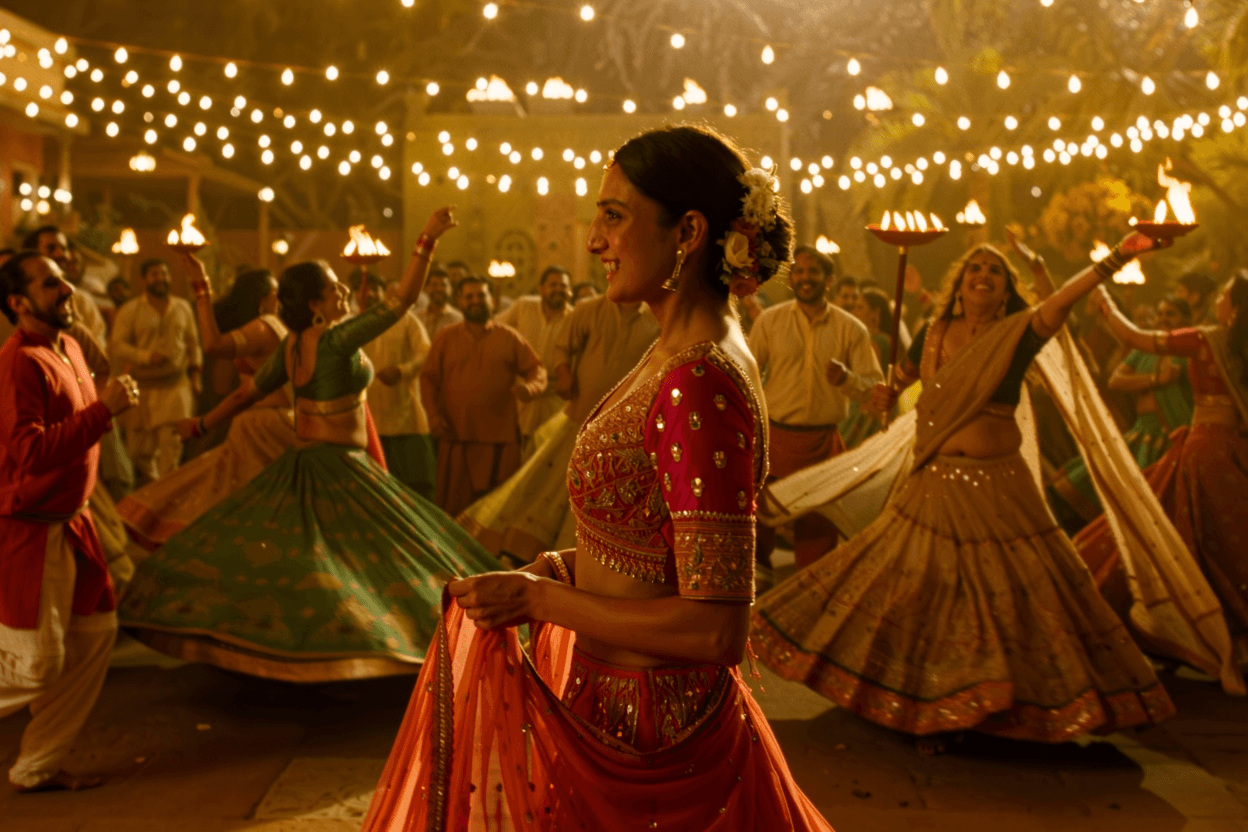
Nine nights of chaniya choli, garba, dandiya, and celebrations that start in the evening and end well past midnight. Nine nights of movement — real movement, sustained dancing over hours, not the polite swaying of a seated wedding reception.
The shapewear requirements for Navratri are completely different from shapewear for a wedding ceremony. A wedding requires stillness, structure, and drape. Navratri requires movement, breathability, and endurance. What works for one fails completely at the other.
What Navratri Actually Demands
Sustained movement. Garba and dandiya involve continuous movement for hours. Shapewear that restricts movement, shifts during dancing, or becomes painful with extended activity is not compatible with Navratri. This is the primary filter. If it doesn't move with you, it doesn't belong here.
Heat and sweat. Navratri happens in October, but garba grounds and community halls are warm — the collective energy of hundreds of dancers raises the temperature significantly. Shapewear that doesn't breathe becomes uncomfortable within the first hour of dancing.
Nine repetitions. You won't wear this once. If your shapewear is uncomfortable on night three, you have six nights remaining. The investment in comfortable, breathable, movement-friendly shapewear pays for itself across the full festival.
Chaniya choli fit. The chaniya (skirt) of a chaniya choli sits at the natural waist, usually tied or hooked. The choli (blouse) is cropped and fitted. The midriff is visible. Shapewear must sit below the choli hem with no visible band at the midriff, and must create a smooth line under the fitted chaniya waist.
What Works for Navratri
Seamless high-waist shapewear in breathable fabric.
High-waist to align with the chaniya waistband — the same principle as lehenga shapewear. The chaniya ties at the natural waist; the shapewear must sit at the same height to avoid visible transitions.
Breathable fabric is the most critical feature for garba. Cotton-blend or moisture-wicking seamless construction handles hours of active dancing in warm environments. Pure synthetic compression fabrics that trap heat are unsuitable.
Seamless construction at the midriff — because the midriff is visible, and any edge or seam will show in the gap between choli and chaniya.
Medium compression, not maximum.
Maximum compression and garba dancing are not compatible. Maximum compression restricts breath and movement — both of which you need when dancing continuously for two hours. Medium compression provides support and structure without limiting how you move.
A waistband that stays during movement.
Rolling is a problem in any context. During garba it's a catastrophe — you can't stop mid-dance to fix your shapewear. A reinforced waistband that holds through vigorous movement is not optional here.
What Doesn't Work for Navratri
Maximum compression styles designed for formal occasions. These restrict movement and breathing. A wedding ceremony shapewear that holds a heavy saree for 10 hours does not translate to garba dancing.
Synthetic-only fabrics. Non-breathable fabrics combined with vigorous dancing in warm spaces create heat and discomfort within the first hour.
Anything with a visible waistband edge at the midriff. The chaniya choli midriff gap means any visible shapewear edge shows. Seamless construction at the top of the shapewear is essential.
Bodysuits. Managing a bodysuit closure during nine nights of active dancing, with costume changes between some nights, is unnecessarily complicated. Separate high-waist shorts or shaper shorts are simpler and just as effective.
Night by Night Practicalities
Washing. Nine nights means nine wears in a row for the same garment, or rotating between two pairs. Shapewear washed and dried correctly overnight is ready for the next evening — hand wash in cool water, air dry flat. Never tumble dry — heat breaks down the elastic.
Different chaniya cholis. Many women wear different outfits across the nine nights. If your chaniya cholis vary in waist height or fit, check that your shapewear works with each before the festival begins.
Comfort over compression. For a nine-night festival involving hours of dancing, comfort is the primary consideration. This is not the context for maximising compression. It is the context for maximising endurance.
Frequently Asked Questions
What shapewear is best for garba dancing?
Medium-compression seamless high-waist shapewear in breathable cotton-blend or moisture-wicking fabric. The priority for garba is movement and breathability, not maximum compression. Shapewear that restricts movement or traps heat will become unwearable within an hour of dancing.
Can you wear shapewear under a chaniya choli?
Yes — high-waist seamless shapewear in a skin tone that matches your complexion. The midriff between the choli and chaniya is visible, so the shapewear must sit below the choli hem with no visible edge, and must be in a skin tone that blends with your complexion.
What to wear under a chaniya choli for Navratri?
High-waist seamless shapewear in breathable fabric, sized to your natural waist measurement. Medium compression for dancing comfort. Skin tone to match your complexion at the midriff.
Does shapewear stay in place during garba?
Only if it has a reinforced waistband designed to hold during movement. Standard shapewear with an unreinforced edge will roll during garba. Look specifically for a dedicated reinforced waistband when buying shapewear for active festival wear.
How do you keep a chaniya from slipping during garba?
A combination of a correctly tied chaniya waist, high-waist shapewear underneath at the same height, and a non-rolling reinforced waistband keeps the chaniya stable through garba. The shapewear provides the stable base the chaniya ties against.
What is comfortable to wear under a chaniya choli?
Breathable seamless shapewear at medium compression — comfortable enough for hours of dancing, structured enough to keep the chaniya sitting correctly at the waist. Cotton-blend or moisture-wicking fabrics perform best in the warm environments where Navratri celebrations happen.
Read next: Shapewear for Lehenga · Why Your Shapewear Keeps Rolling Down · How to Choose Your Saree Shapewear Size