A lehenga is not a forgiving garment. The waistband sits at the natural waist. The skirt sits close to the hips. The blouse leaves the midriff visible. Every layer is deliberately fitted — which means every layer underneath it matters.
The right shapewear under a lehenga is invisible. The wrong shapewear shows at the waist, bunches at the hips, or becomes unbearable within a few hours. This is a guide to getting it right.
Why Lehenga Shapewear Is Different
The lehenga presents specific challenges that saree shapewear doesn't face.
The visible waistband. A lehenga skirt waistband sits at the natural waist and is often visible at the midriff between the skirt and blouse. Any shapewear that creates bulk at the waist will show here — a visible ridge under the skirt waistband, or bunching at the midriff. This is the most common lehenga shapewear problem and it's entirely avoidable with the right style.
The hip fit. Lehenga skirts are often fitted at the hip before flaring. Shapewear that adds bulk in the hip area changes how the skirt sits and can prevent it from closing properly. Seamless construction is not optional here — it's the only construction that works.
The blouse. Many lehenga blouses are cropped and fitted, leaving the midriff between the blouse and skirt visible. Shapewear must sit completely below the blouse hem with no visible edge or roll.
The duration. Weddings, sangeets, and festive events involving lehengas are long. 8–10 hours minimum. The shapewear must be as comfortable at hour eight as it is at hour one.
What Shapewear Under a Lehenga Must Do
- Sit at the natural waist — not below it. The lehenga waistband sits at the natural waist. Shapewear that sits lower creates a visible transition between shapewear and skirt at the hip. High-waist construction that sits at the same level as the lehenga waistband is the only option.
- Seamless construction throughout. The fitted hip section of a lehenga skirt sits close to the body. Any seam, raised edge, or textured surface shows as a visible ridge through the fabric. Seamless or laser-cut construction is not optional — it is the only construction invisible enough for a fitted lehenga.
- Skin-tone fabric at the midriff. The gap between a cropped lehenga blouse and the skirt waistband is visible. Any shapewear that might show in this gap must match your skin tone precisely. A white or black waistband visible at the midriff interrupts the entire look.
- A waistband that holds for eight to ten hours. You are wearing this through a full celebration. A waistband that digs in at hour two will be unbearable by hour six. Reinforced, non-rolling construction that holds without creating pressure points is what makes long-event wearing manageable.
- Breathable fabric for movement and heat. Sangeets, mehndi functions, and receptions involve dancing, standing, and warm spaces. Non-breathable synthetic fabric becomes uncomfortable within two hours of active wear.
What Works Under a Lehenga
High-waist seamless shapewear.
The high waist ensures the shapewear sits at the same level as the lehenga waistband — no lower, which would create a visible transition, and no higher, which would bunch above the skirt. Seamless construction means no raised seam edges that would be visible through the fitted hip of the skirt.
Skin-tone fabric.
The midriff between lehenga blouse and skirt is often visible. Any shapewear that might show in this gap must be in a skin tone that matches your complexion. A visible band of black or white shapewear at the midriff undoes the careful styling of the entire outfit.
A waistband that doesn't dig.
You will be wearing this for hours while sitting, standing, and moving. A waistband that digs in is manageable for two hours. By hour five it is a genuine problem. The waistband must hold firmly without creating pressure points. Waistband construction is also what determines whether shapewear stays in place at all — here's why shapewear rolls down and what prevents it.
Breathable fabric.
This is non-negotiable for Indian celebrations. Sangeets, mehndi functions, and weddings happen in warm spaces with a lot of movement. Shapewear that doesn't breathe creates discomfort that compounds across hours.
What Doesn't Work Under a Lehenga
Bodysuits. A bodysuit that snaps at the crotch becomes complicated to manage during a long event. They also create bulk at the midriff that can show between the lehenga blouse and skirt.
Low-rise or mid-rise styles. These sit too low for a lehenga waistband and create a visible transition between the shapewear and the skirt. The shapewear must sit at the waist, not below it.
Thick synthetic fabrics. They don't breathe, they add visible bulk, and they become increasingly uncomfortable over long events.
Shapewear with visible seams. Under the fitted hip section of a lehenga skirt, any seam or textured edge will show. Seamless is the only option.
Shapewear by Lehenga Type
Heavy bridal lehenga
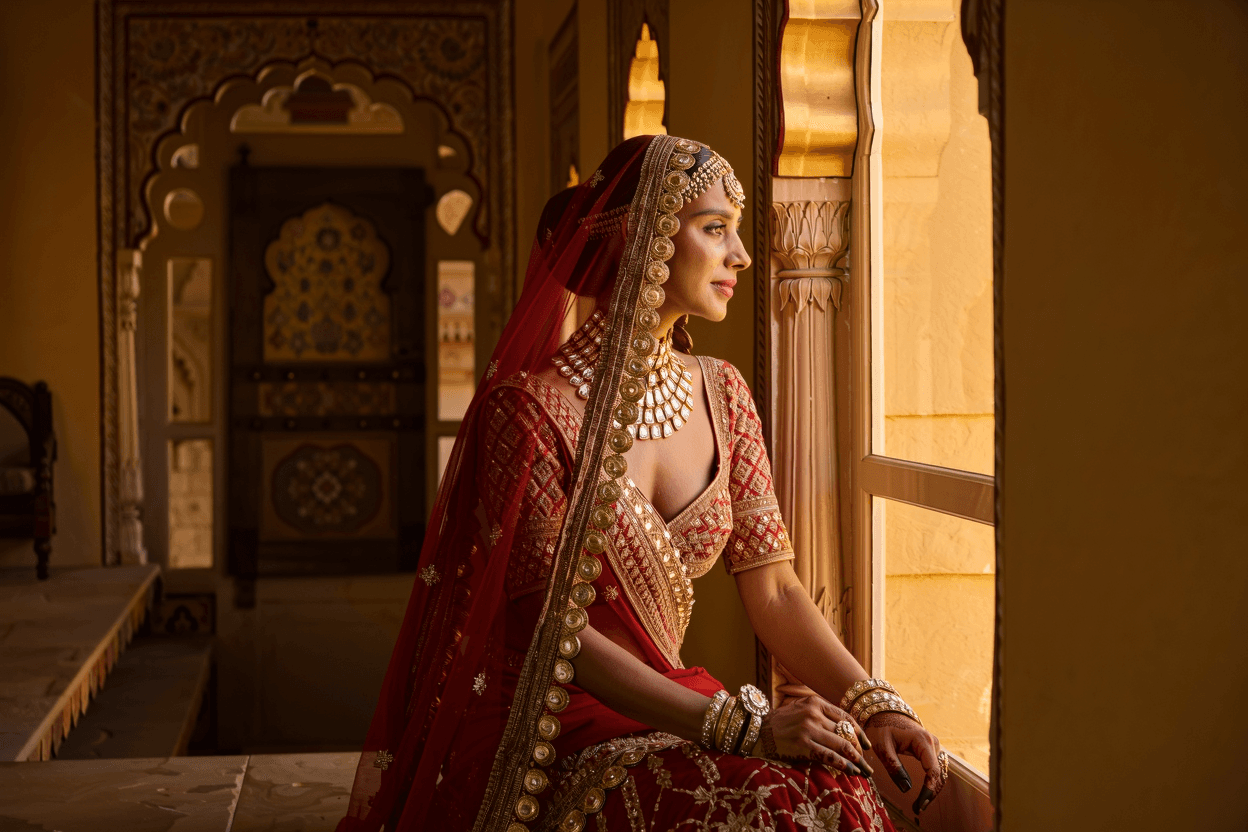
High-compression seamless shapewear at high waist. The weight of a heavily embroidered bridal lehenga requires a firm base that holds without shifting. Breathable fabric is critical for the length of a wedding day.
Festive/party lehenga
Lighter compression seamless shapewear at high waist. For a shorter event (sangeet, reception) in a lighter lehenga, medium compression in a breathable fabric is sufficient and more comfortable.
Net or sheer lehenga
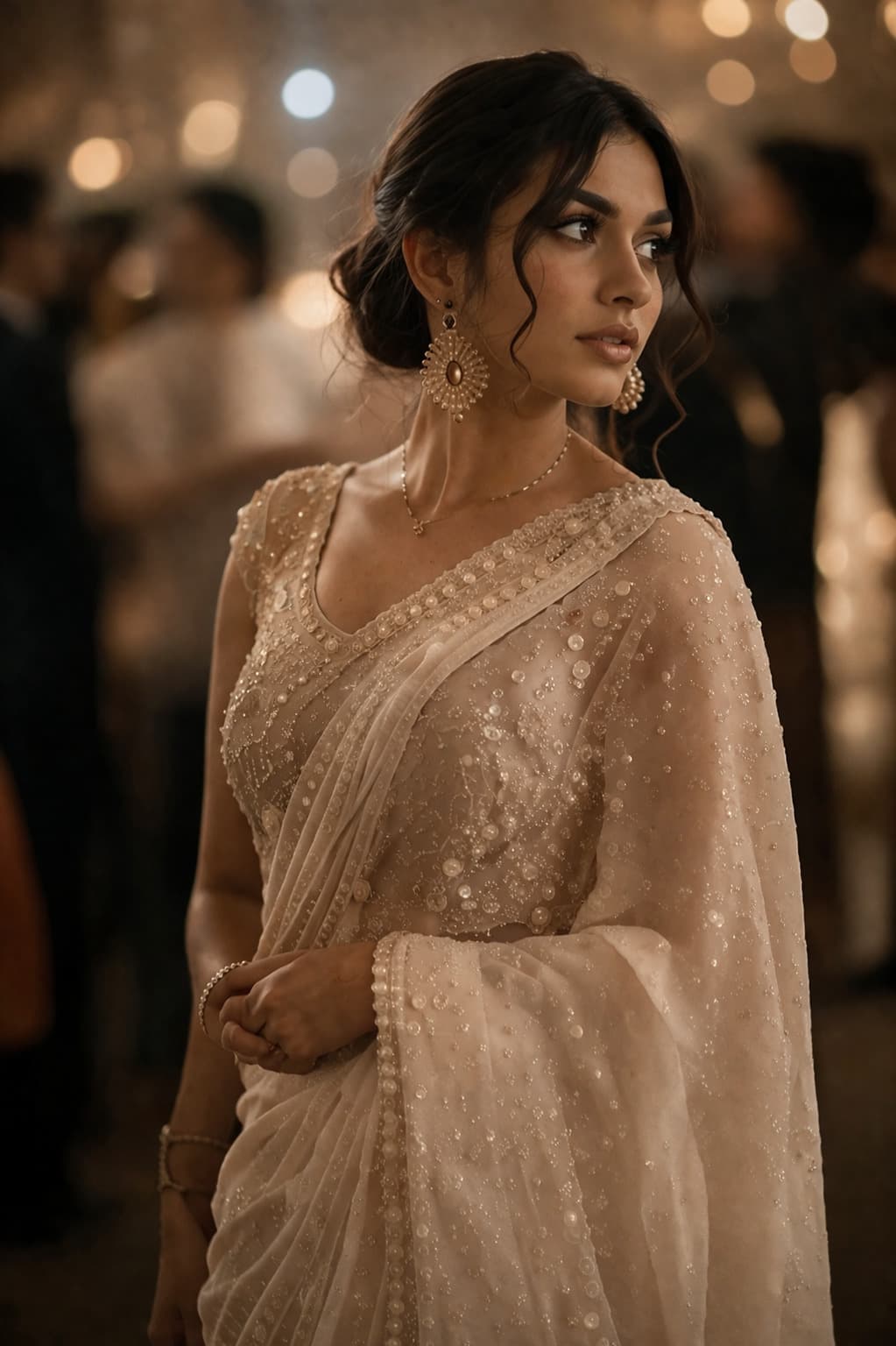
Ultra-thin seamless shapewear in an exact skin tone match. Net and sheer fabrics are unforgiving — every edge, texture, and color difference will show. Only the thinnest seamless construction in a perfectly matched skin tone works here.
Sharara and palazzo-cut lehenga
The flare begins lower — at the knee or mid-thigh rather than the hip. High-waist seamless shapewear that stays clean from waist to hip is the requirement. Avoid anything that adds bulk in the thigh area where the garment begins to flare.
The Trial Rule
Wear your shapewear during every lehenga fitting, not just the final one. The lehenga should be fitted with the shapewear in place — the way the skirt sits at your hips and waist changes with shapewear underneath. Alterations should be done with the shapewear on.
Discovering on the morning of the event that the lehenga doesn't close properly over the shapewear is a problem with no good solution at that point.
Frequently Asked Questions
What shapewear should I wear under a lehenga?
High-waist seamless shapewear in a skin tone that matches your complexion. The high waist aligns with the lehenga waistband and the seamless construction prevents visible lines under the fitted hip of the skirt.
Can shapewear show under a lehenga?
It can, if you choose the wrong style. Seamless construction with no raised seam edges is invisible under fitted lehenga skirts. Avoid shapewear with visible seams, thick synthetic fabrics, or styles that sit too low and create a transition line at the hip.
What to wear under a heavy bridal lehenga?
High-compression seamless shapewear at high waist with breathable fabric. The compression holds the weight of the lehenga steady; the breathable fabric keeps you comfortable through the full length of the wedding day.
Should lehenga shapewear be skin tone?
If any part of the midriff is visible between the blouse and skirt — yes, absolutely. Shapewear that doesn't match your skin tone will show in the gap and interrupt the line of the outfit.
How tight should shapewear be under a lehenga?
Firm enough to hold and stay in place through extended wear, but not so tight that it creates discomfort after a few hours. If you can't take a deep breath normally while seated, it's too tight. If it rolls down when you bend, it's not firm enough. Which shapewear works for your specific lehenga and occasion duration? Find Your Fit tells you in three questions.
Can I wear shapewear under a net lehenga?
Yes, but only seamless shapewear in an exact skin tone match. Net is translucent and shows every edge, seam, and color. Only ultra-thin seamless construction in a perfectly matched skin tone is invisible under net.
Read next: Bridal Shapewear India · Can You Wear Shapewear Under a Saree? · How to Choose Your Saree Shapewear Size · Shapewear for Body-Hugging Sarees