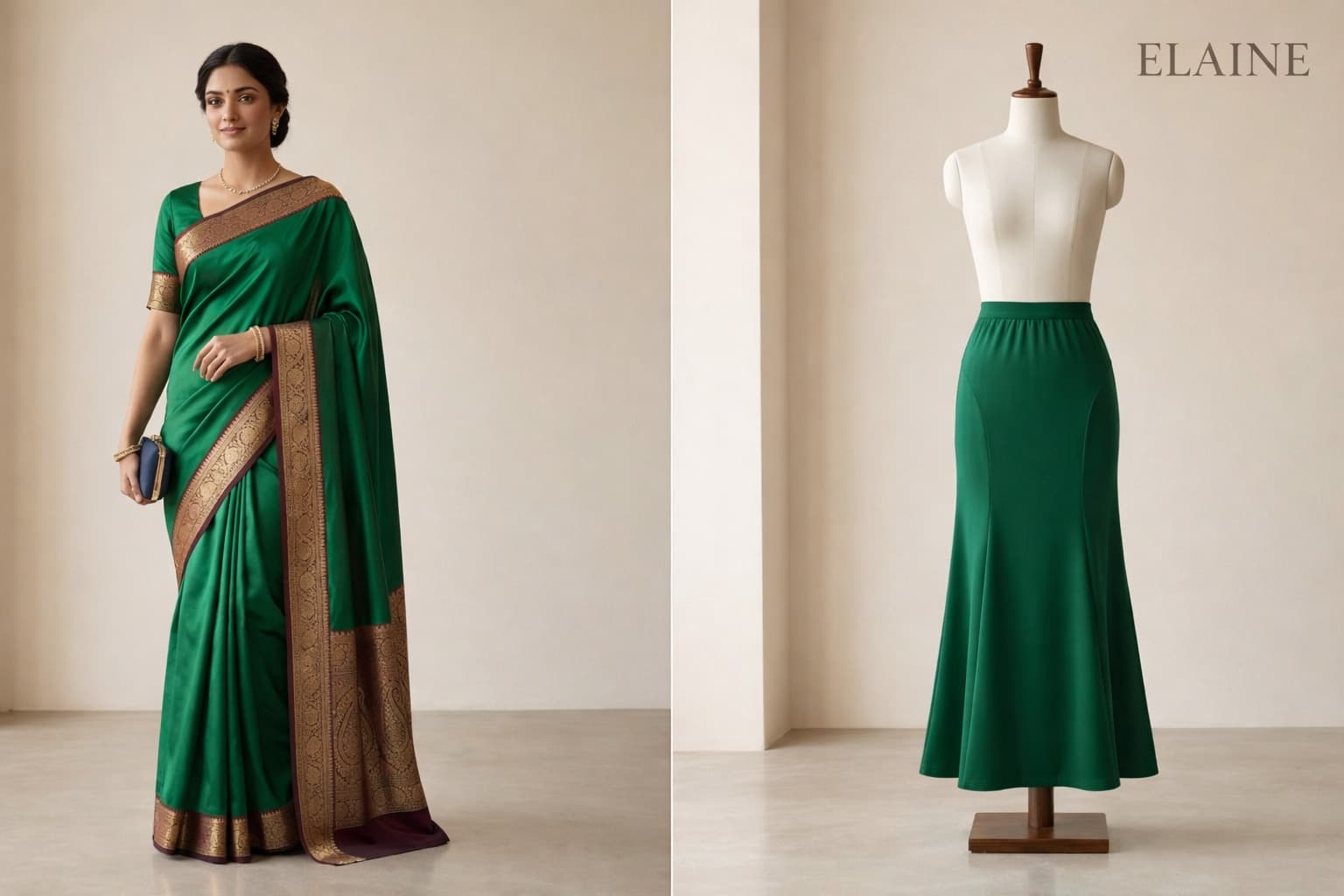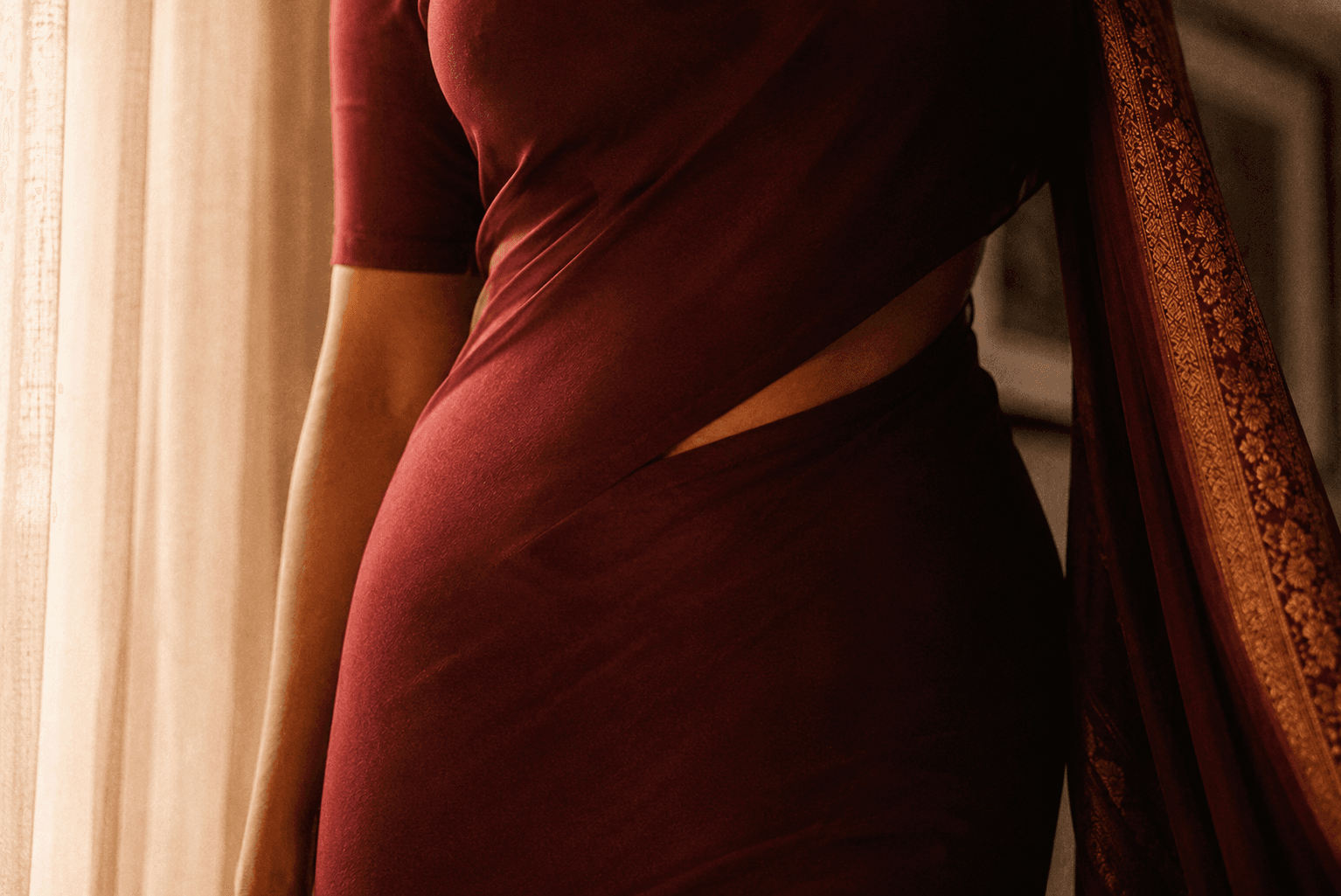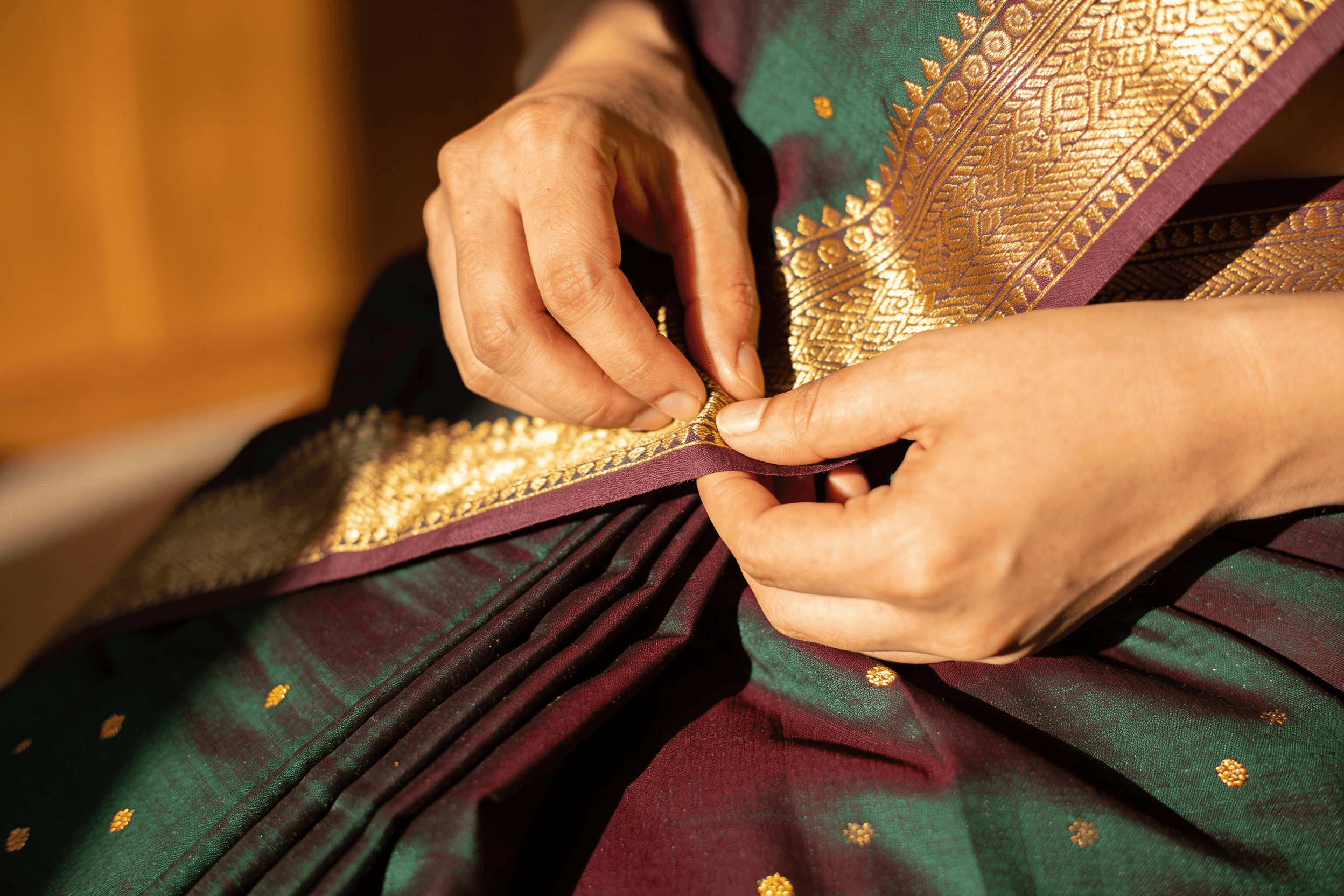
A Kanchipuram silk saree is not a lightweight garment. A full silk Kanchipuram can weigh between 800 grams and 2 kilograms — the zari work alone adds significant weight. When you wear one for a full day ceremony or wedding, you are managing that weight across your shoulders, waist, and hips for 8–12 hours.
What you wear underneath determines whether that experience is effortless or exhausting.
Why Kanchipuram Is a Different Problem
Most shapewear is designed for lightweight Western garments. A Kanchipuram silk saree is the opposite of that — heavy, structured, and unforgiving of what sits beneath it.
The weight shifts. As the day progresses, a heavy silk saree shifts. The pallu becomes heavier on the shoulder. The pleats loosen slightly. The petticoat drawstring becomes more noticeable. A base layer that doesn't hold means constant adjustment throughout the event.
The silk is unforgiving. Pure silk shows everything beneath it. Seam edges, waistband ridges, fabric bunching — all of it shows through the silk. The shapewear must be completely smooth with no raised edges.
The petticoat relationship matters. A Kanchipuram is pinned and pleated over a petticoat. The shapewear sits between the skin and the petticoat. If the shapewear bunches or rolls, the petticoat sits unevenly, and the saree drape is compromised from the beginning.
The ceremony duration. Kanchipuram sarees are worn for ceremonies — weddings, temple functions, family occasions — that are long. The base layer must hold for the full duration without becoming uncomfortable.
For a complete guide to how different saree fabrics behave and what each requires underneath, here is the full fabric guide.
What to Wear Under a Kanchipuram Silk Saree
High-waist silk-blend compression shapewear.
The silk blend is the critical element. Synthetic shapewear doesn't breathe under a heavy silk saree — the combination creates heat that becomes unbearable within a few hours. Silk-blend fabric breathes with the saree rather than against it.
High waist is non-negotiable — the shapewear must sit at the same height as the petticoat waistband so the pleats tuck cleanly with no visible transition.
Firm compression, not maximum compression.
The goal is stability, not constriction. The shapewear must hold firmly enough that the saree sits steady through movement and sitting — but not so tightly that it becomes painful over a long ceremony. For a 10-hour wedding, comfortable-but-firm outlasts tight-and-rigid every time.
A non-rolling waistband.
The petticoat drawstring already applies pressure at the waist. If the shapewear waistband also rolls or digs, the combined effect is significant discomfort by midday. A reinforced waistband that holds without rolling is essential for heavy saree wear.
Seamless or minimal-seam construction.
Pure silk shows seam edges. Seamless construction or construction with flat, minimal seams ensures the silk surface remains smooth from every angle. Even a small raised seam can create a visible line through a heavy silk drape.
What Not to Wear
Standard petticoat alone. A petticoat provides the drape foundation but no compression or stability. For a heavy Kanchipuram over a full day, a stable base layer significantly reduces the effort required to keep the saree in place.
Synthetic-only shapewear. Breathability is not a luxury feature when wearing heavy silk for 10+ hours. Synthetic shapewear that doesn't breathe creates heat, discomfort, and the urgent need to remove it — usually in the middle of a ceremony.
Low-rise or mid-rise shapewear. The waistband must sit at petticoat height. Anything lower creates bulk precisely where the saree pleats tuck in.
Heavily textured or seamed shapewear. Anything with raised seams, prominent texture, or thick fabric edges will show through pure silk.
The Petticoat Relationship
The shapewear and petticoat work together as a system. The shapewear provides compression and stability; the petticoat provides the drape surface for the saree. They must sit at the same height and work without interfering with each other.
The drawstring on the petticoat should tie comfortably over the shapewear — not fighting against it. If the shapewear waistband and the petticoat drawstring are both applying maximum pressure to the same point at the natural waist, the combined effect is uncomfortable within hours. Choose a shapewear waistband that holds firmly without adding excess pressure at the drawstring point.
For Specific Kanchipuram Occasions
Wedding ceremonies (full day, 8–12 hours)
Maximum breathability, firm compression, reinforced non-rolling waistband. Comfort outlasts compression at this duration. Silk-blend fabric is mandatory.
Temple functions (2–4 hours)
Standard compression, breathable fabric. Shorter duration means comfort requirements are slightly less demanding — but a rolling waistband is still unacceptable at any duration.
Family occasions and receptions
Dependent on duration and environment. For warm outdoor settings, prioritize breathability. For air-conditioned indoor venues, standard compression fabrics perform well.
Frequently Asked Questions
What do you wear under a Kanchipuram silk saree?
High-waist silk-blend compression shapewear over which the petticoat is worn. The silk blend breathes with the heavy fabric, the high waist aligns with the petticoat for a clean drape, and the compression holds the saree in place through extended wear.
Does shapewear show under a Kanchipuram saree?
Poorly constructed shapewear with raised seams or visible edges will show under pure silk. Seamless or flat-seam shapewear in a skin tone that matches your complexion is invisible under Kanchipuram silk.
What petticoat is best for a Kanchipuram saree?
A satin or silk petticoat in a matching colour allows the Kanchipuram to drape correctly. Cotton petticoats create more friction and can cause the saree to sit unevenly. The petticoat should sit at the natural waist at the same height as the shapewear waistband.
Can I wear a body shaper under a Kanchipuram saree?
Yes, if it is high-waist, breathable, and seamless. The critical requirements for Kanchipuram specifically are breathability (due to the weight and duration of wear) and seamless or minimal-seam construction (due to the transparency of silk).
How do I keep a Kanchipuram saree in place all day?
The combination of a silk-blend high-waist shapewear base, a well-tied petticoat at the natural waist, and correctly pinned pleats keeps a Kanchipuram steady through extended wear. The shapewear reduces the amount of shifting that happens as the day progresses.
What size shapewear for a Kanchipuram saree?
The shapewear should fit your natural waist and hip measurements exactly — not a size smaller for more compression. Too-tight shapewear under a heavy saree for 10+ hours creates discomfort that outweighs any benefit. See our sizing guide for exact measurements.
Read next: Can You Wear Shapewear Under a Saree? · Which Shapewear is Best for a Saree? · Bridal Shapewear India