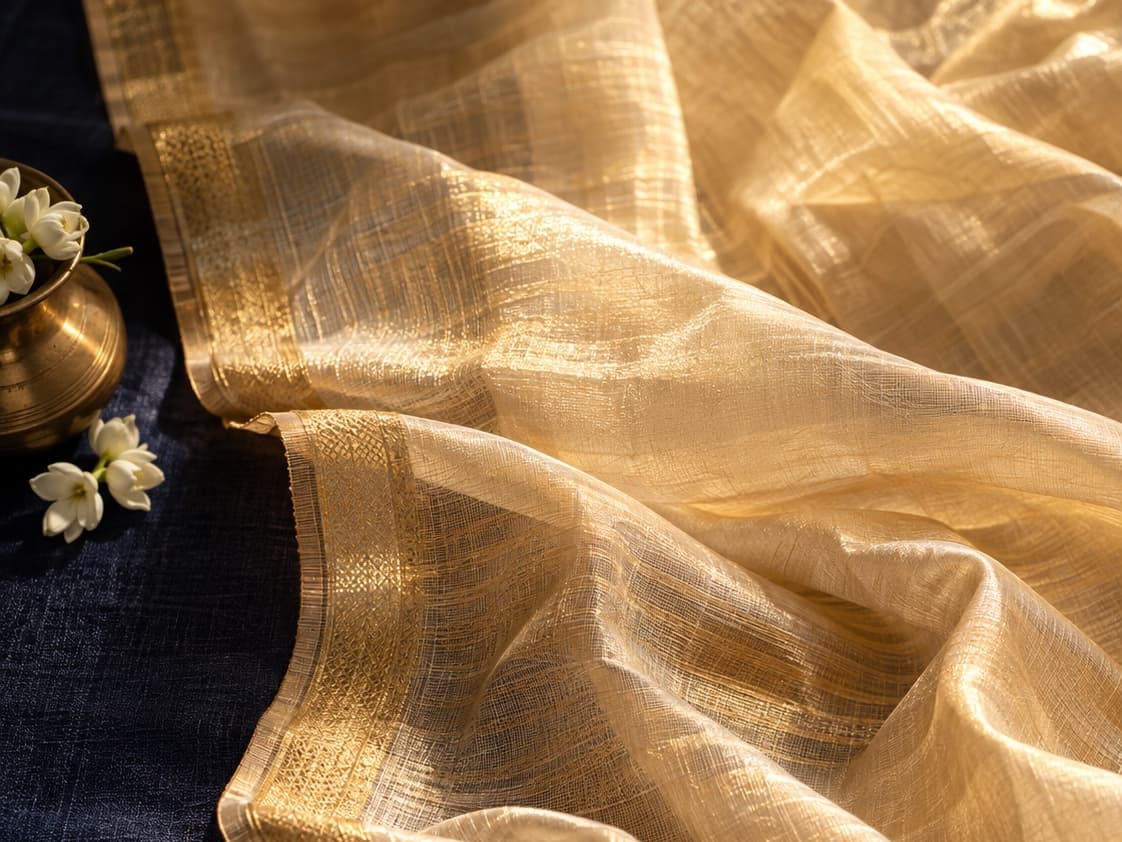
Tissue silk is one of the most recognisable festive fabrics: light, luminous, and often woven with metallic zari that catches the light as it moves. It is also one of the fabrics where what you wear underneath is most likely to matter, because it can be sheer and shiny at the same time.
The short answer: Choose a smooth, low-profile layer in a shade close to your skin tone, and a petticoat close to the saree's base colour. Tissue sarees can be both sheer and shiny, so colour and surface texture may show more than under many opaque silks. Hold the saree up to daylight first to see how much.
What Is Tissue Silk?
Tissue describes a lightweight, translucent textile characterised by metallic yarn or zari woven into the fabric, often with a fine silk base. It is not a single regional saree or a single fibre composition.
You will see "tissue", "tissue silk" and "tissue saree" used almost interchangeably. Tissue silk usually means a silk-based tissue, while "tissue saree" is the broader commercial term. Tissue sarees can use different base fibres and constructions. Silk is particularly associated with traditional tissue silk, while cotton and blended versions are also sold.
Tissue constructions occur in several Indian saree traditions. You will encounter terms such as Banarasi tissue, Chanderi tissue, and Kanchipuram (also commonly called Kanjeevaram or Kanjivaram) tissue, although their fibre composition, weave structure and drape can differ. A Chanderi-based tissue may feel lighter and more transparent, while a Kanchipuram tissue can retain some of the firmer hand associated with Kanchipuram silk. The actual drape depends on the specific weave, yarns and zari.
Fibre content and weight vary from piece to piece, so treat the word "tissue" as a starting point, not a specification.
Sheer and Shiny: Why Both Matter
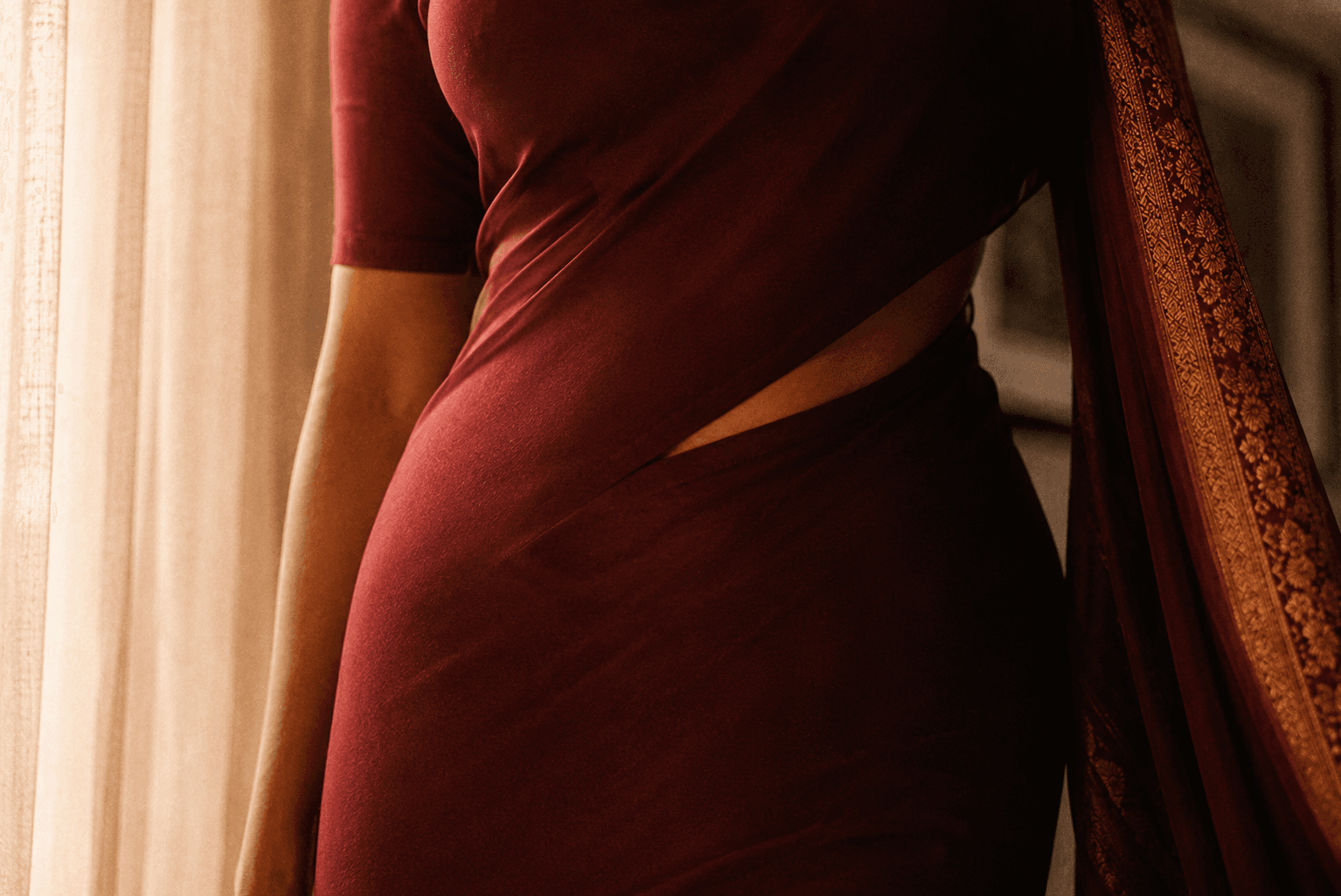
Sheerness and sheen are separate properties, but tissue sarees can have both. Sheerness determines how much light and detail passes through the fabric. Sheen determines how strongly the surface reflects light. Together they change three things:
- Colour. The colour of the layer beneath can influence how the saree looks, particularly in strong light and in photographs.
- Edges. A raised seam, a folded waistband, or a textured edge can be visible through the weave.
- Sheen. Because a shiny surface catches and redirects light, raised edges or folds underneath can sometimes become more noticeable, particularly under directional or strong lighting.
How much of this applies depends on the specific saree.
Two Quick Tests Before You Decide
The daylight test. Hold the saree up to a window and look at the plainest part of the body. What you can see through it is a useful indication of how visible an underlying layer may be when you wear it. It is a test, not a guarantee, since the drape changes the folds, the angle, and the light. The same test is explained in what to wear under a Chanderi saree.
The movement test. Fold a section over your arm in front of a window and move it slowly. Watch how the light travels across the surface. If it picks out every ripple, a smooth layer beneath may matter more.
What to Wear Under a Tissue Silk Saree
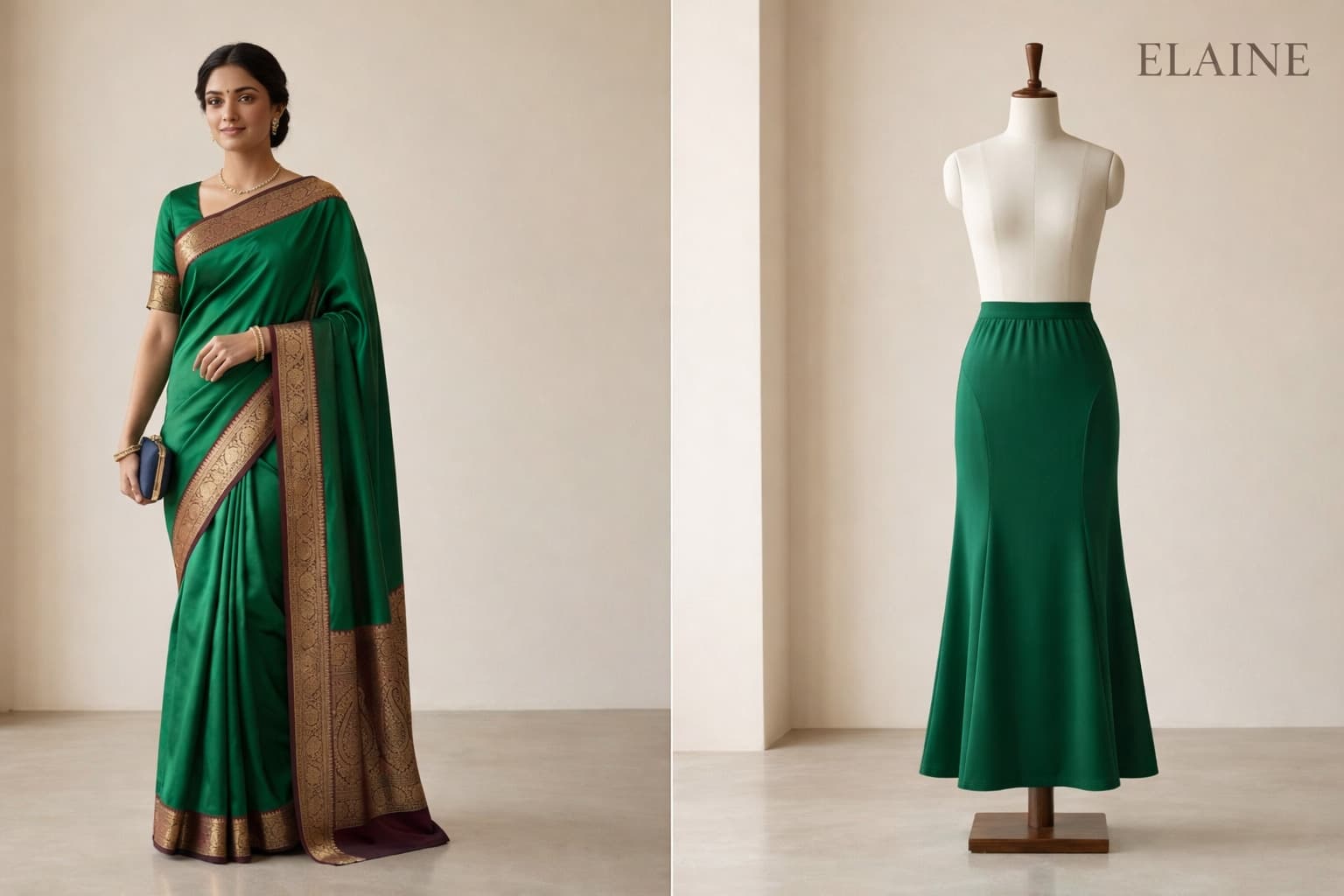
- A smooth, low-profile layer. Seamless, bonded, or flatlock construction, with no raised edges, ribbing, or lace trim.
- A shade close to your skin tone. If you want the layer to be visually unobtrusive, a shade close to your skin tone is often a useful starting point.
- A petticoat close to the saree's base colour. If you want to minimise colour interaction through a translucent saree, a petticoat close to the saree's base colour is a useful starting point. Pale golds and ivories often work with a white or cream petticoat. Deeper shades usually call for a closer match.
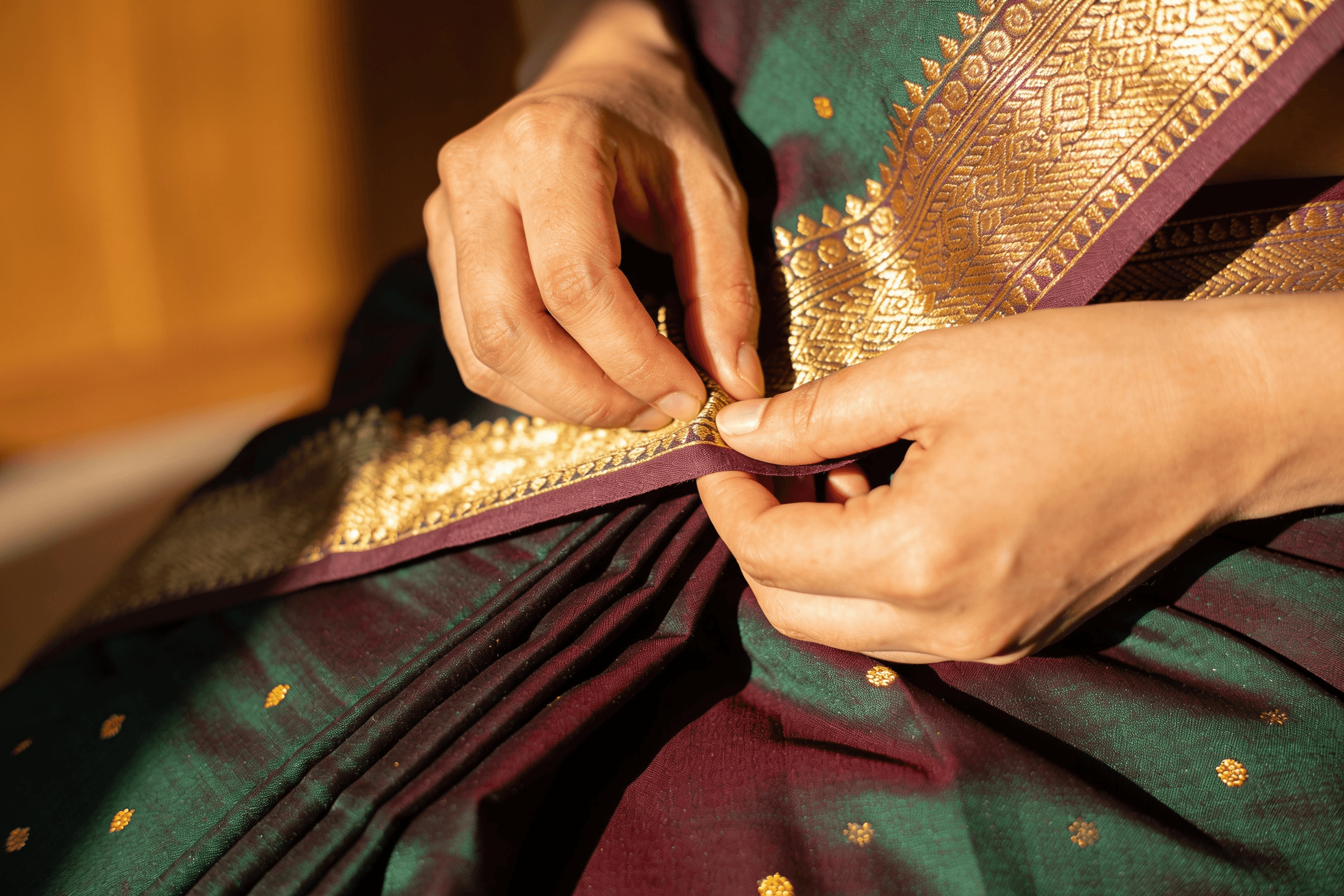
- A flat waistband edge. Keep the shapewear and petticoat waistbands at close to the same height, so their edges do not overlap.
- Compression that suits you. A useful starting point is the lowest level of compression that gives you the support you want. For a long event, fit and comfort matter more than choosing a particular compression level.
Match the Advice to the Base Weave
Treat this as a starting point. The specific saree matters more than the label.
| If your tissue saree is | It may behave like | Read next |
|---|---|---|
| Chanderi tissue | A lightweight, often translucent Chanderi-based fabric | What to Wear Under a Chanderi Saree |
| Banarasi tissue | A silk-and-zari construction in which the density of metallic weaving can affect the appearance and light transmission | What to Wear Under a Banarasi Saree |
| Kanchipuram tissue | A silk-based tissue that may retain some of the firmer hand associated with Kanchipuram silk | What to Wear Under a Kanchipuram Silk Saree |
| Tissue cotton | A cotton-based tissue, usually sold as a lighter, breezier option for warm weather | Shapewear in Indian Heat and Humidity |
For Festive Occasions
Diwali and evening functions. Long evenings, photographs, and often strong or flash lighting. Colour interactions and underlying edges can sometimes be more noticeable in photographs, particularly under directional or flash lighting, so it is worth checking the layer in the kind of light you will be photographed in. See shapewear for Diwali.
Weddings. A long day, so comfort over several hours matters as much as how the layer looks under the fabric. See shapewear for Indian wedding guests.
Warm daytime occasions. Tissue cotton is often chosen for warm weather. Comfort also depends on what is worn beneath, so lightweight construction that allows moisture to move is worth considering.
What to Consider Avoiding
- A strongly contrasting layer beneath, if you want it to be visually unobtrusive.
- Ribbed, lace-edged, or textured pieces.
- A waistband edge that is raised or folded.
- A petticoat that contrasts strongly with the saree's base colour, if you want to minimise colour interaction.
Frequently Asked Questions
What do you wear under a tissue silk saree?
A smooth, low-profile layer in a shade close to your skin tone, with a petticoat close to the saree's base colour. Under tissue, colour and surface smoothness deserve attention alongside compression level. The daylight test will give you an indication of how much care your saree needs.
Is a tissue silk saree see-through?
It can be somewhat translucent, but the degree varies considerably with the weave, yarns, colour, and density of metallic work. Two sarees both called tissue can behave differently.
Does shapewear show under a tissue saree?
It can, if its colour or surface texture contrasts with the skin. Under some lighting, the metallic sheen can make raised edges or folds more noticeable. A smooth piece in a shade close to your skin tone is less likely to. Test with the saree in daylight before you decide.
What colour petticoat for a tissue silk saree?
A petticoat close to the saree's base colour is a useful starting point if you want to minimise colour interaction through the fabric. A white or cream petticoat often works under pale gold or ivory. Deeper shades usually call for a closer match.
What is the difference between tissue silk and Chanderi?
Chanderi is a handloom tradition from Madhya Pradesh. Tissue is a lightweight, translucent textile construction with metallic yarn or zari, which can be made within several traditions, including Chanderi. So one saree can be both. See what to wear under a Chanderi saree.
Is tissue silk suitable for warm weather?
Many tissue fabrics are lightweight, but weight varies with the base fibre, weave, and amount of metallic yarn. Tissue cotton is often chosen for warm weather. Comfort also depends on what is worn beneath, so it is worth checking the specific saree. See shapewear in Indian heat and humidity.
Do I need shapewear under a tissue saree?
Not necessarily. A well-fitted petticoat in a suitable colour can be enough for a short occasion. For a long evening or a wedding, some women prefer shapewear. It depends on the duration, how much you will be moving, and how translucent the saree is. For the order of layers, see how to wear shapewear under a saree.
Read next: What to Wear Under a Chanderi Saree · What to Wear Under a Kanchipuram Silk Saree · What to Wear Under a Banarasi Saree · Which Saree Fabric Is Body Hugging? · How to Wear Shapewear Under a Saree, Step by Step