Most guides about wearing a sari cover the draping. How to pleat, where to tuck, how to pin the pallu so it stays on your shoulder.
What they do not cover is what goes underneath — and why what goes underneath determines whether the drape holds for two hours or twelve.
This is that guide.
Before You Read — The Short Version
If the occasion is today or tomorrow:
- You need a petticoat (underskirt) — ankle-length, colour-matched to your sari, tied at the natural waist. Buy this with the sari. Do not use a regular slip.
- You need a sari blouse — the cropped top that matches the sari. Usually comes with the sari or is stitched separately.
- For a long occasion (5+ hours) you also want a foundation layer underneath the petticoat — high-waist seamless shapewear that keeps the petticoat from sliding and cushions the waistband pressure across a full day.
The order everything goes on:
- Foundation layer against the skin
- Petticoat tied over it at the natural waist
- Blouse on top
- Sari draped over the petticoat
Not sure what foundation layer to get for your specific sari?
Find Your Fit → — two minutes, specific recommendation.
The Three Layers — What Each One Does
A sari is not a single garment. It is a system of three layers, and each layer has a job.
The underskirt (petticoat)
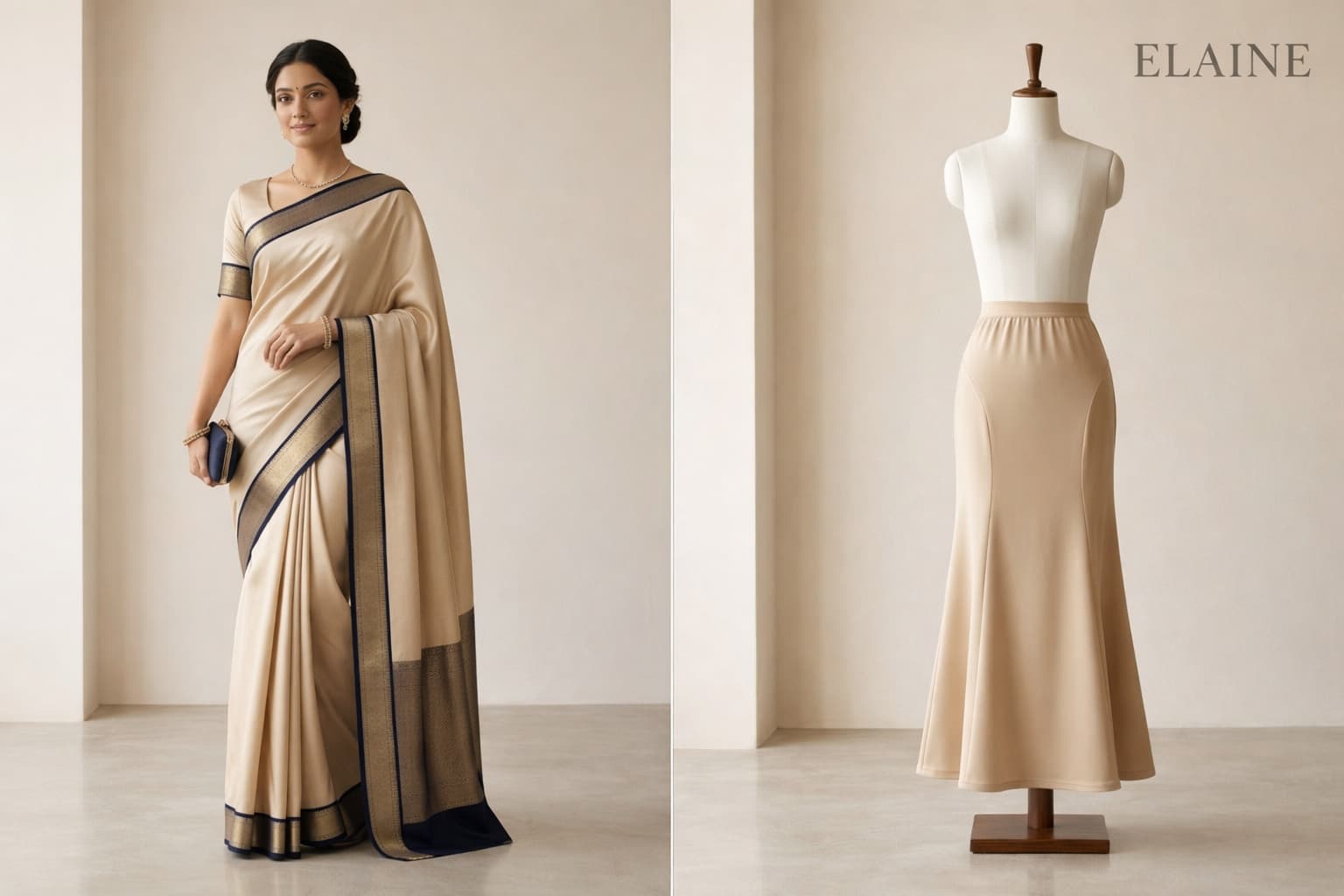
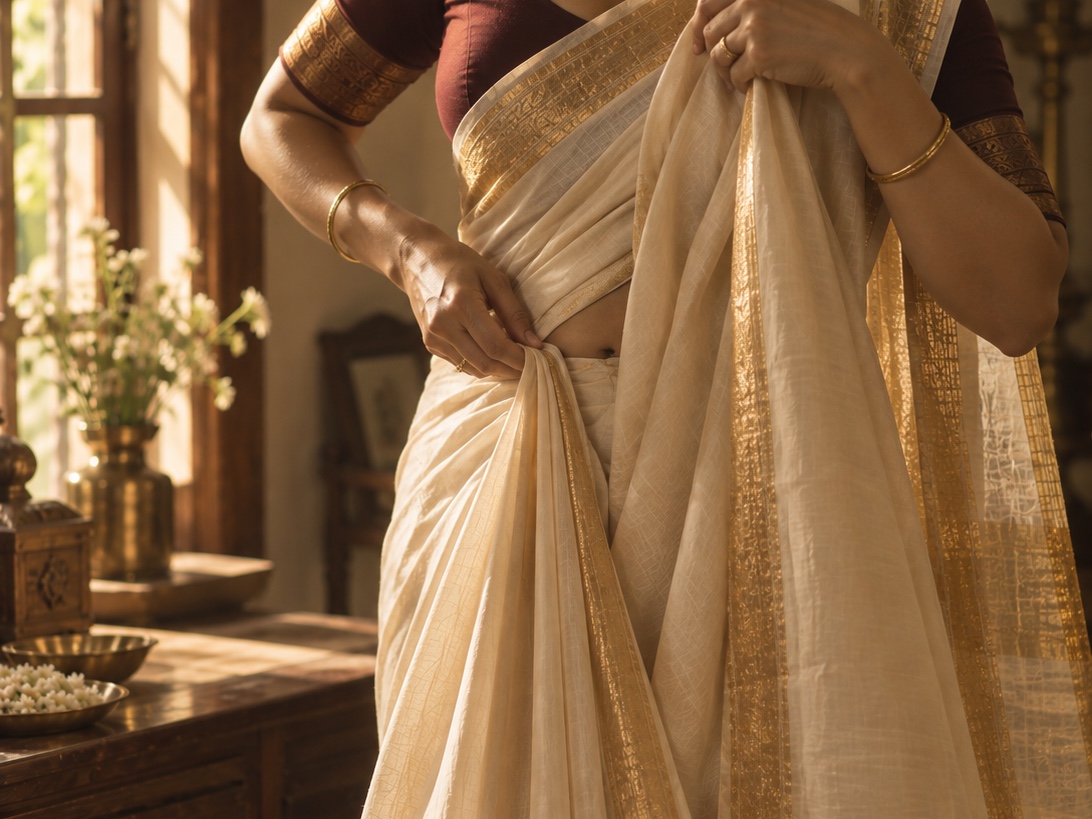
Called a petticoat or underskirt, this is the fitted skirt that sits at the waist before the sari goes on. The sari is tucked into the waistband of the petticoat. The pleats are anchored to it. The entire drape depends on the petticoat staying exactly where it was tied, at the natural waist, for the full duration of the occasion.
This is why a loose petticoat ruins a sari drape. If the waistband slides down even slightly, the pleats shift, the sari loses its line, and no amount of re-tucking fully fixes it.
The blouse
The cropped blouse — choli or simply sari blouse — covers the midriff and upper body. It is usually matched to the sari fabric or border. For a first-time wearer, the blouse is typically purchased or stitched alongside the sari.
The foundation layer
This is the layer most guides skip. Between the skin and the petticoat, a foundation layer — shapewear designed for sari wear — provides two things the petticoat alone cannot: stability at the waist and a smooth surface for the sari to drape over.
It is optional for short occasions. For a six-to-ten-hour Indian wedding or celebration, it is the difference between a drape that holds all evening and one that needs constant attention.
The Quick Answer
If you are wearing a sari for a long occasion and want to know the minimum to understand:
Petticoat — always. Tied at the natural waist, firm enough to hold the tuck, reaching the ankle.
Foundation layer — recommended for long occasions. High-waist seamless shapewear, worn underneath the petticoat, that anchors the petticoat system at the natural waist.
The order: foundation layer against the skin first. Petticoat tied over it at the same waist height. Sari draped over the petticoat.
Why the Foundation Layer Matters
The petticoat has a drawstring at the waist. Tied firmly, it holds. But tied against bare skin for six or more hours, that drawstring creates pressure — sometimes significant pressure — at the natural waist. Women who have worn saris regularly know this feeling.
A foundation layer between the skin and the petticoat does two things. It cushions the waistband pressure — one of our testers noted that the marks and irritation she usually got from the petticoat drawstring were noticeably less when she wore a foundation layer underneath. And it provides an anchor point — a surface with grip that the petticoat sits against, which keeps both layers at the correct height rather than gradually sliding down.
For a short occasion — a ceremony of two or three hours — a well-tied petticoat on its own is fine. For a wedding that runs from the ceremony through lunch through the reception and into the evening, the foundation layer is what allows you to stop thinking about the sari.
If You Are Wearing a Sari for the First Time
A few specific things that matter for first-time wearers.
Get the petticoat with the sari.
Do not assume the sari comes with an underskirt or that you can use a general slip or skirt as a substitute. The petticoat needs to be sari-specific — the right length (ankle-length), the right waistband (a drawstring that ties firmly at the natural waist), and ideally colour-matched to the sari so it is not visible at the hem.
The petticoat length matters.
It should reach the ankle — the same length as the sari. Too short and the gap shows. Too long and it peeks below the sari hem.
The colour matters more than you might expect.
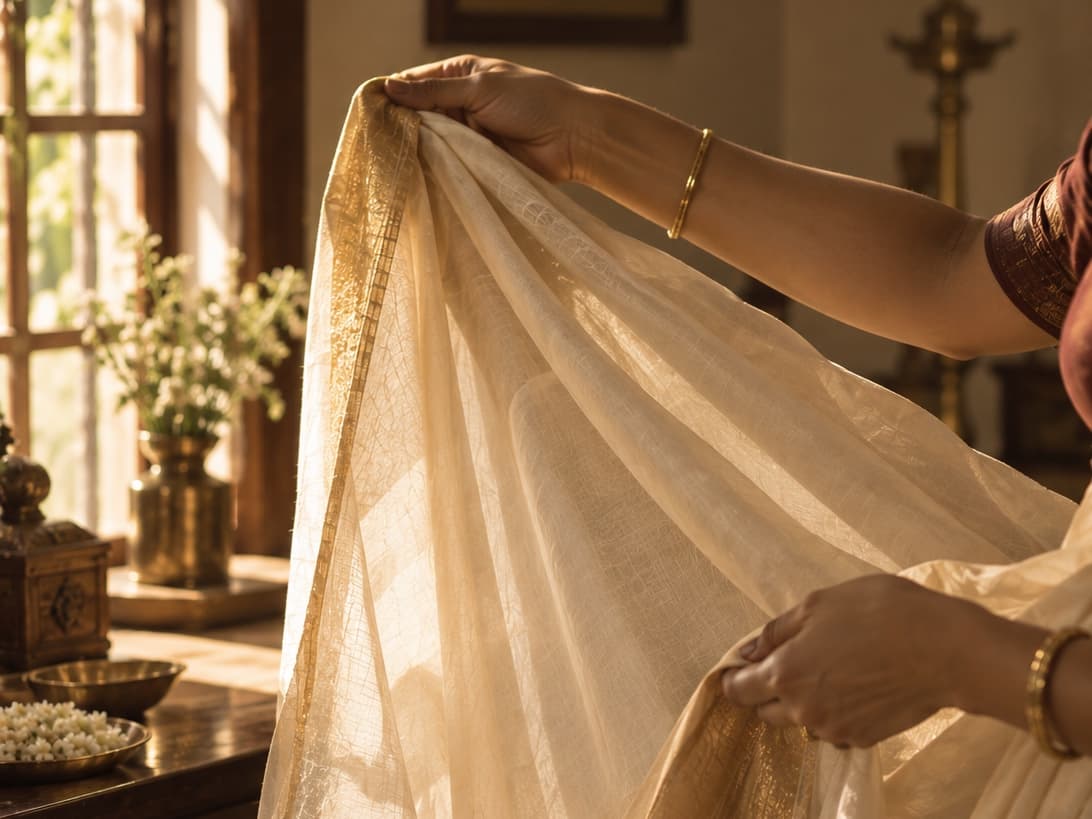
For sheer or lightweight sari fabrics — chiffon, georgette, light silk — the petticoat colour is visible through the fabric. A white petticoat under a pale pink georgette sari reads as white through the fabric. Match the petticoat to the sari colour as closely as possible.
Have someone help you drape it the first time.
This is not a failure of technique. A sari drape that holds all evening is tied differently from one that looks correct for a photograph. An experienced person — a family member, a sari shop, a professional dresser — can show you the specific tuck tension and pleat placement that keeps the whole system in place. This is significantly more useful than any video tutorial.
Wearing a Sari in a Cooler Climate
If you are wearing a sari at an occasion in the UK, Canada, the United States, or Australia — where the venue is air-conditioned or the weather is cool — the foundation layer requirements shift slightly.
In India, breathability is the primary fabric requirement — the foundation layer must not trap heat in warm and humid conditions. In a cooler or air-conditioned environment, this is less of a concern. What matters more is warmth without bulk.
A lightweight foundation layer in a smooth, thin fabric gives you a base layer of warmth without the bulk that would show through the sari drape. This is the specific advantage of a proper foundation layer over improvised alternatives like tights or thermal underlayers — both of which can add bulk at the waist that disrupts the petticoat tie and the sari tuck.
If you are moving between an outdoor cold environment and a warm indoor reception — which is common at diaspora weddings in cooler climates — a breathable lightweight foundation layer handles both without needing to change.
The Specific Problems a Foundation Layer Solves
The sari comes undone.
The most common first-time experience: the sari looks correct at the start and gradually comes undone over the evening. This is almost always a petticoat problem — the waistband has slid down, pulling the tuck point with it. A foundation layer keeps the petticoat at the correct height by giving the waistband a gripped surface to sit against rather than bare skin.
The waistband leaves marks.
A petticoat drawstring tied firmly enough to hold for a long occasion leaves marks on the skin — sometimes lasting hours after the sari comes off. A foundation layer underneath distributes that pressure across a wider surface area. One of our testers who compared wearing a foundation layer to wearing just a petticoat described the mark intensity as noticeably less with the foundation layer — even when the foundation layer itself had a rolling waistband.
The drape loses its line mid-evening.
A sari drape that was perfect at 6pm looks different at 11pm because the petticoat has shifted slightly with six hours of movement. The pleats have loosened. The pallu has slipped. A stable foundation layer that anchors the petticoat at the correct height minimises how much the drape shifts across a long evening.
What to Look For
If you are buying a foundation layer specifically for sari wear, three things matter:
High-waist construction.
The foundation layer must reach the natural waist — the same height as the petticoat drawstring. Mid-waist or low-waist shapewear ends below this point and provides no anchor for the petticoat system.
Seamless construction.
For lightweight or sheer saris — chiffon, georgette, light silk — the foundation layer's seams and edges can show through the fabric. Seamless construction with laser-cut or bonded edges is invisible under sheer sari fabric.
A waistband that holds.
The foundation layer's waistband must stay at the natural waist across the full duration of the occasion. A plain compression edge without reinforcement will roll down within a few hours — which defeats the entire purpose of wearing it. Look for a reinforced inner band with a grip surface on the interior.
For the specific construction features that determine whether a waistband holds — what to look for and what to ask the brand — the buying guide covers this in full.
Where to Buy Outside India
This is the practical gap for diaspora wearers. Most sari shapewear is manufactured and sold in India — Clovia, Zivame, Dermawear — and international shipping from India can be slow, expensive, or unreliable for a time-sensitive occasion.
What works for diaspora buyers:
High-waist seamless shapewear from Western brands is a usable alternative if sari-specific shapewear is not available. The requirements are the same: high-waist, seamless, reinforced waistband, skin-tone colour match. Most Western shapewear brands carry high-waist seamless options that satisfy these requirements even if they were not designed specifically for sari wear.
The one feature most Western shapewear lacks: a waistband engineered for the sustained load of a heavy silk sari over a long occasion. For a short occasion or a lighter sari fabric, this is less critical. For a heavy silk sari at a full-day Indian wedding, it matters.
Elaine is building foundation wear specifically engineered for Indian occasion wear and sari drape — including for diaspora wearers in cooler climates. Find Your Fit gives a specific recommendation for your fabric, occasion, and duration in under two minutes.
Frequently Asked Questions
What do you wear under a sari?
Three layers: a foundation layer against the skin (optional but recommended for long occasions), a petticoat tied over it at the natural waist, and the sari draped over the petticoat. The petticoat is essential — it is the layer the sari tucks into and the pleats anchor against. The foundation layer underneath the petticoat keeps the petticoat at the correct height and cushions the waistband pressure over a long occasion.
Do you wear a petticoat under a sari?
Yes. The petticoat — also called an underskirt or inskirt — is the essential base layer for sari draping. The sari is tucked into the petticoat's waistband and the pleats are pinned to it. Without a petticoat, the sari has nothing to tuck into or anchor against. Shapewear or a foundation layer sits underneath the petticoat — it does not replace it.
What is the difference between a petticoat and sari shapewear?
They do different jobs. The petticoat provides the drape surface — the sari wraps around it and tucks into its waistband. Sari shapewear or a foundation layer goes underneath the petticoat, against the skin. It provides a stable anchor point for the petticoat, cushions the waistband pressure over long occasions, and gives the sari a smooth surface to drape over. For short occasions, a petticoat alone is sufficient. For long occasions, wearing both is more comfortable.
Can I wear shapewear under a sari instead of a petticoat?
No — shapewear does not replace the petticoat. A sari needs the petticoat's waistband to tuck into and the length of the petticoat to drape against. Shapewear without a petticoat has no tuck point and no drape surface. The correct order is: foundation layer or shapewear against the skin, petticoat tied over it, sari draped over the petticoat.
What should I wear under a sari to an Indian wedding?
A petticoat matched to your sari colour, tied firmly at the natural waist. For a wedding that runs all day — ceremony, lunch, reception, evening — a high-waist seamless foundation layer underneath the petticoat will keep the waistband stable and reduce the pressure marks from the drawstring across the full duration. Have someone experienced help you drape the sari for the first time if possible — the specific tuck tension and pleat placement that holds for ten hours is different from what looks correct for a photograph.
What do non-Indian women wear under a sari?
The same layers as anyone else — a petticoat at the natural waist, and optionally a foundation layer underneath it. The practical additions for diaspora wearers or first-time wearers in cooler climates: a lightweight foundation layer adds a base layer of warmth without the bulk of tights or thermal underlayers that disrupt the petticoat fit. Getting the petticoat in the right length and colour-matched to the sari matters as much for non-Indian wearers as for anyone else.
What colour petticoat should I wear under a sari?
As close to the sari colour as possible, particularly for lightweight or sheer fabrics. For chiffon, georgette, and light silk — the most common fabrics for wedding guest saris — the petticoat colour is visible through the fabric. A white or mismatched petticoat under a pale or sheer sari reads as a different colour through the drape. Most sari shops will help you match the petticoat to the sari when you purchase.
Read next: What to Look For in Saree Shapewear — The Waistband Buying Guide · How to Choose Your Saree Shapewear Size · We Heard the Same Four Complaints About Saree Shapewear · How to Choose Shapewear for Your Saree — The Complete Decision Guide