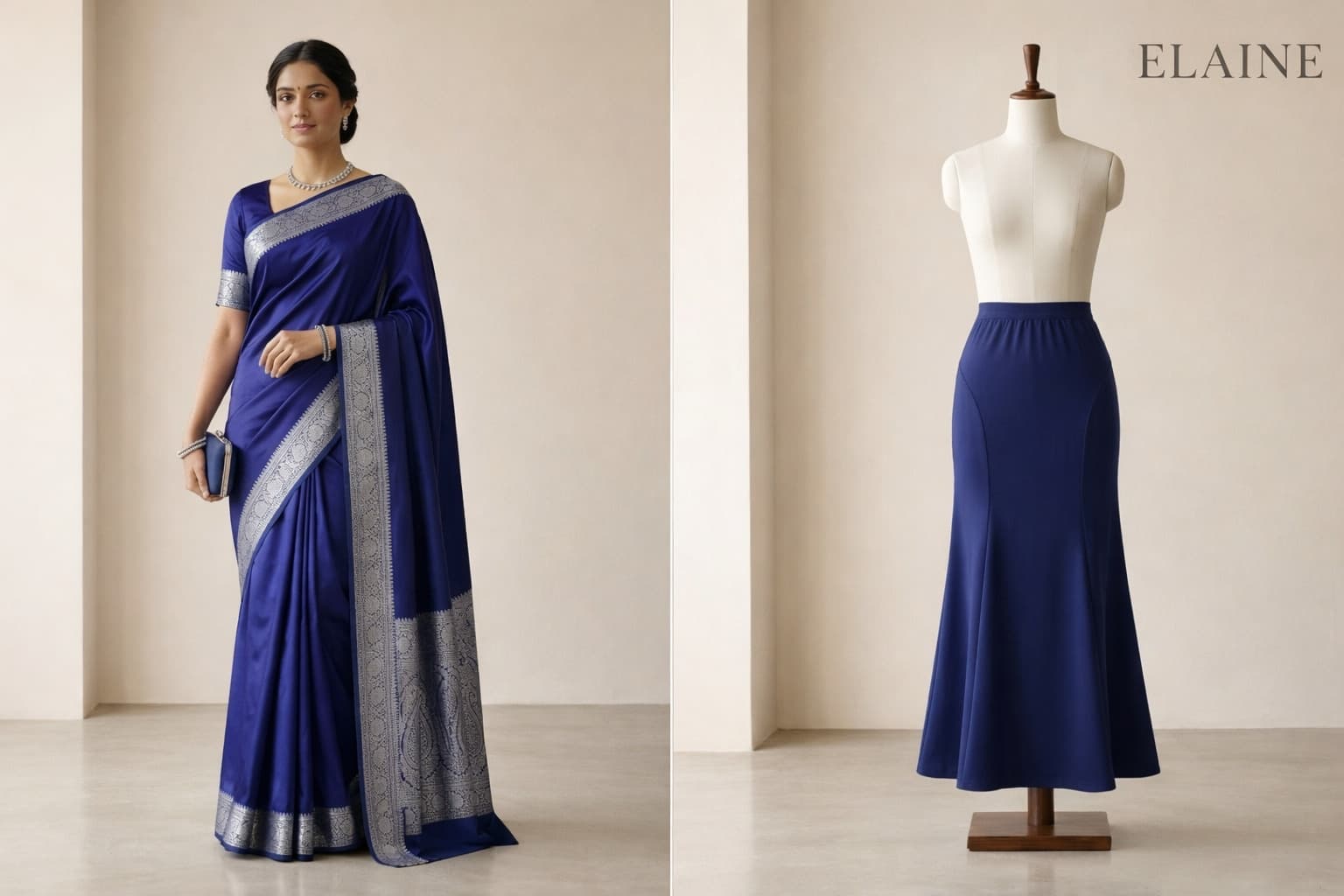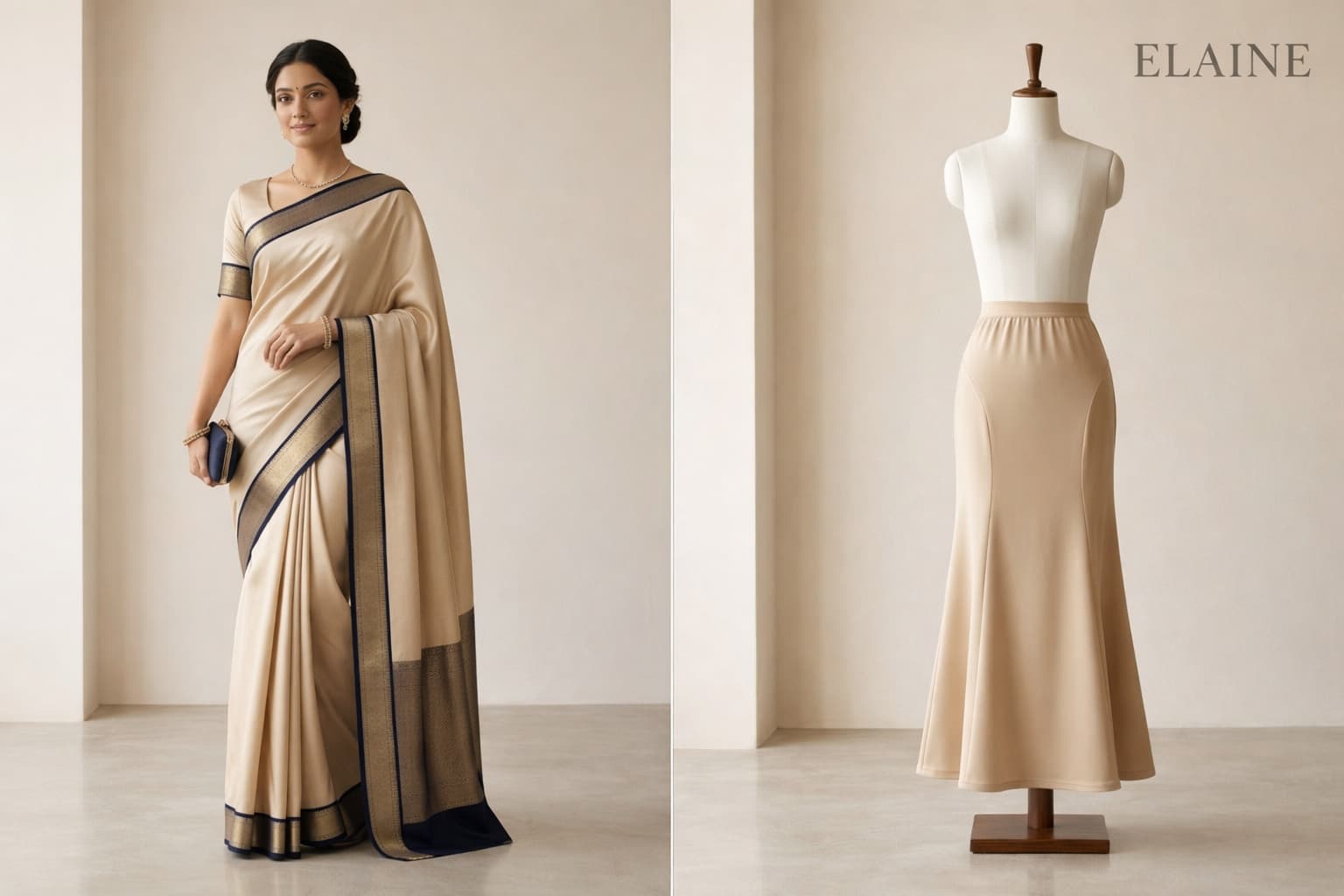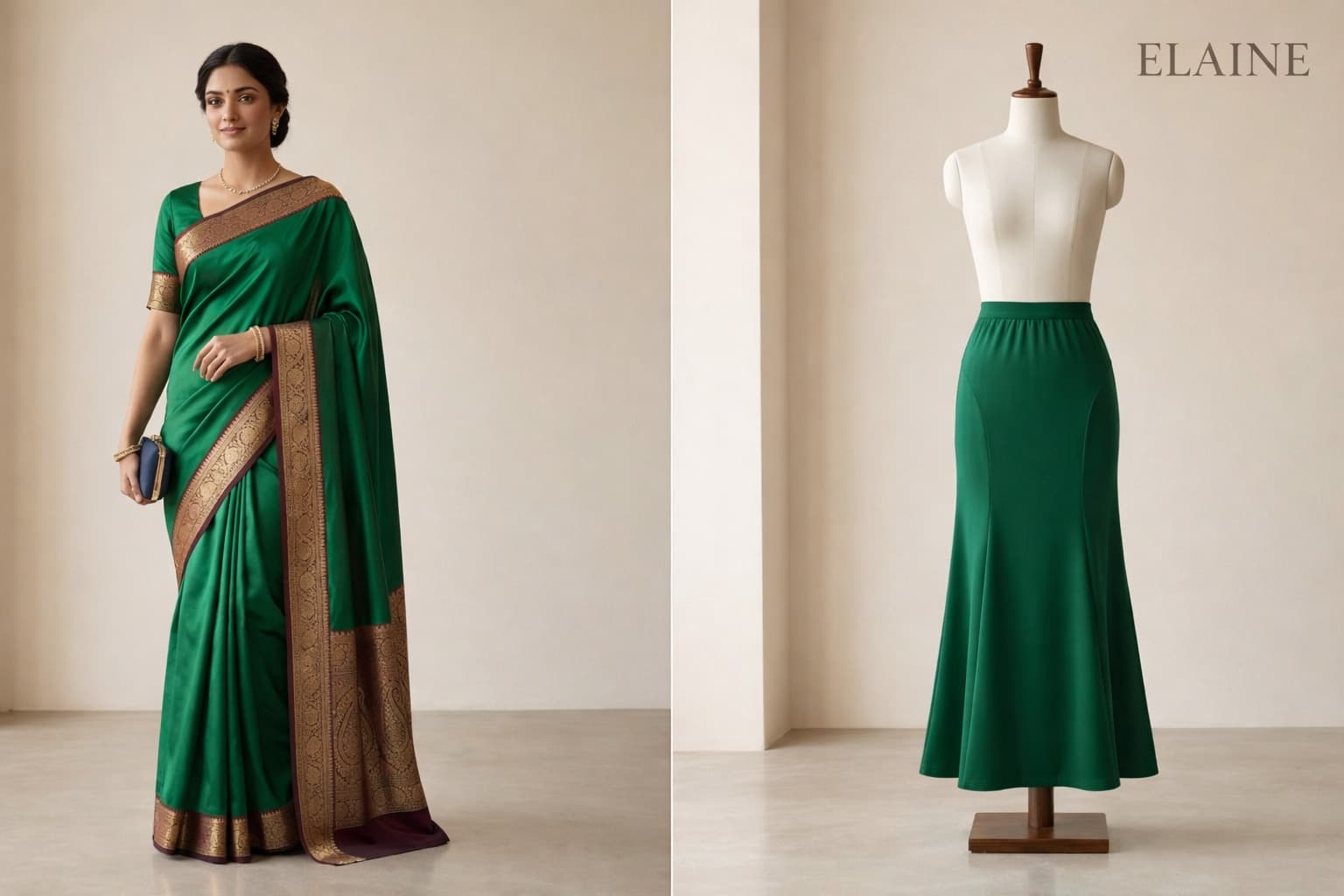
Before Elaine made anything, we asked questions.
Not survey questions. Real ones, in real conversations — with women who wear sarees to weddings they're hosting, weddings they're attending, receptions that run past midnight, pujas that start before sunrise. We wanted to understand the experience of the day itself. Not the garment. The day.
We expected to hear about fit. About fabric, and heat, and pleats. And we did — but almost always as a preface to something else. Somewhere in nearly every conversation, the woman across from us would arrive at a version of the same sentence. One of them said it plainly enough that we wrote it down word for word:
"I just need to stop worrying about it all the time."
It. Not the saree — she loved the saree. Not her body — she wasn't asking to be reshaped. The it was smaller and more constant than either: the low hum of monitoring that runs underneath a long occasion. Is anything showing. Is anything shifting. Can I sit through the meal, dance at the sangeet, bend to touch feet, lift a child onto a hip — without part of my attention standing guard.
That hum has a cost, and it isn't measured in comfort. It's measured in presence. A woman half-monitoring herself is half-somewhere-else. She is at her sister's wedding and also, quietly, not.
Here is what struck us most: the category she was describing never talks about any of this.
Read what's written about what goes under a saree and you'll find a language of machinery. Compression levels. Control panels. Four-way stretch. Tummy taming, waist snatching, silhouette correction. It is the vocabulary of a problem to be managed — and the problem, always, is her.
We think that's exactly backwards.
The women we spoke to were not asking to be corrected. They were asking to be released — from a single, specific, solvable kind of vigilance. What they wanted underneath a Kanjivaram was not an instrument. It was an absence: the absence of worry.
That distinction sounds small. It changes everything about how you build.
If you're making an instrument, you optimise for what it does to a body. If you're making an absence, you optimise for what it removes from a mind — which means the measure of success is not how something looks in a mirror at 6 p.m., but whether she has thought about it even once by 11.
This is why we're publishing these conversations as a series rather than folding them quietly into product decisions. The research didn't just tell us what to make. It told us what to refuse.
We will not describe a woman's body as a set of zones to be controlled. We will not sell her a smaller version of herself as the prize. And we will not pretend the traditional petticoat was a mistake — for generations it did its job with a kind of honest simplicity, and many of the women we spoke to said so with real affection. What changed is not women. What changed is how long the days are, how much they hold, and how little room is left in them for a hum of worry that serves no one.
"I just need to stop worrying about it all the time."
One sentence, from one conversation. It has become something like a founding document for us — a standard everything we make will be held against. Not: does it shape. But: does it silence the hum. Does it give her the whole day back.
That is the experience we are building for. The saree was never the problem. The worry was. We intend to take only the worry.
This is the first essay in What We Heard, an ongoing series drawn from Elaine's research conversations with women across India. Quotes are shared with permission and lightly edited only for length.
Elaine · elaine.co.in